
High blood pressure affects millions of people in India and around the world. Recently, health news outlets and research summaries have highlighted moringa as a “miracle tree” with potential heart health benefits, including support for blood pressure balance. Reports have noted that moringa’s nutrients may help reduce inflammation and support metabolic health, which is important for cardiovascular wellness.
Scientific studies and clinical trials are also emerging that explore how moringa and high blood pressure are linked. Early research suggests that regular use of moringa leaf may help lower systolic and diastolic blood pressure in human subjects.
In Ayurvedic practice, moringa has long been used to nourish the heart and stabilise internal balance without harsh side effects when taken correctly. This article will explain how moringa leaf and high blood pressure support works, whether moringa seed is good for high blood pressure, and what an Ayurvedic perspective suggests about safe moringa dosage for high blood pressure.
Moringa, also known as Shigru, has been mentioned in Ayurvedic texts for supporting heart health, circulation, and metabolic balance.
Moringa for High Blood Pressure: How It Works
Moringa for high blood pressure works through multiple supportive actions. It nourishes the body while gently correcting internal imbalances.
Moringa helps by:
- Supporting healthy blood vessel relaxation
- Improving circulation and oxygen flow
- Reducing oxidative stress
- Supporting normal lipid and sugar balance
From an Ayurvedic view, high blood pressure is linked with aggravated Vata and Pitta dosha. Moringa’s cooling, grounding, and nutrient-rich nature helps pacify these doshas when taken correctly.
Moringa Leaf and High Blood Pressure
Moringa leaf and high blood pressure support is mainly due to its mineral and antioxidant content.
Moringa leaves naturally contain:
- Potassium, which supports fluid balance
- Magnesium, which supports vessel relaxation
- Polyphenols and flavonoids, which protect blood vessels
Ayurveda values moringa leaves for their deep nourishment without heaviness. Regular intake may help maintain stable blood pressure when combined with a proper diet and lifestyle.
Moringa Leaves on High Blood Pressure: Traditional Use
Traditionally, moringa leaves on high blood pressure were consumed as:
- Light vegetable preparations
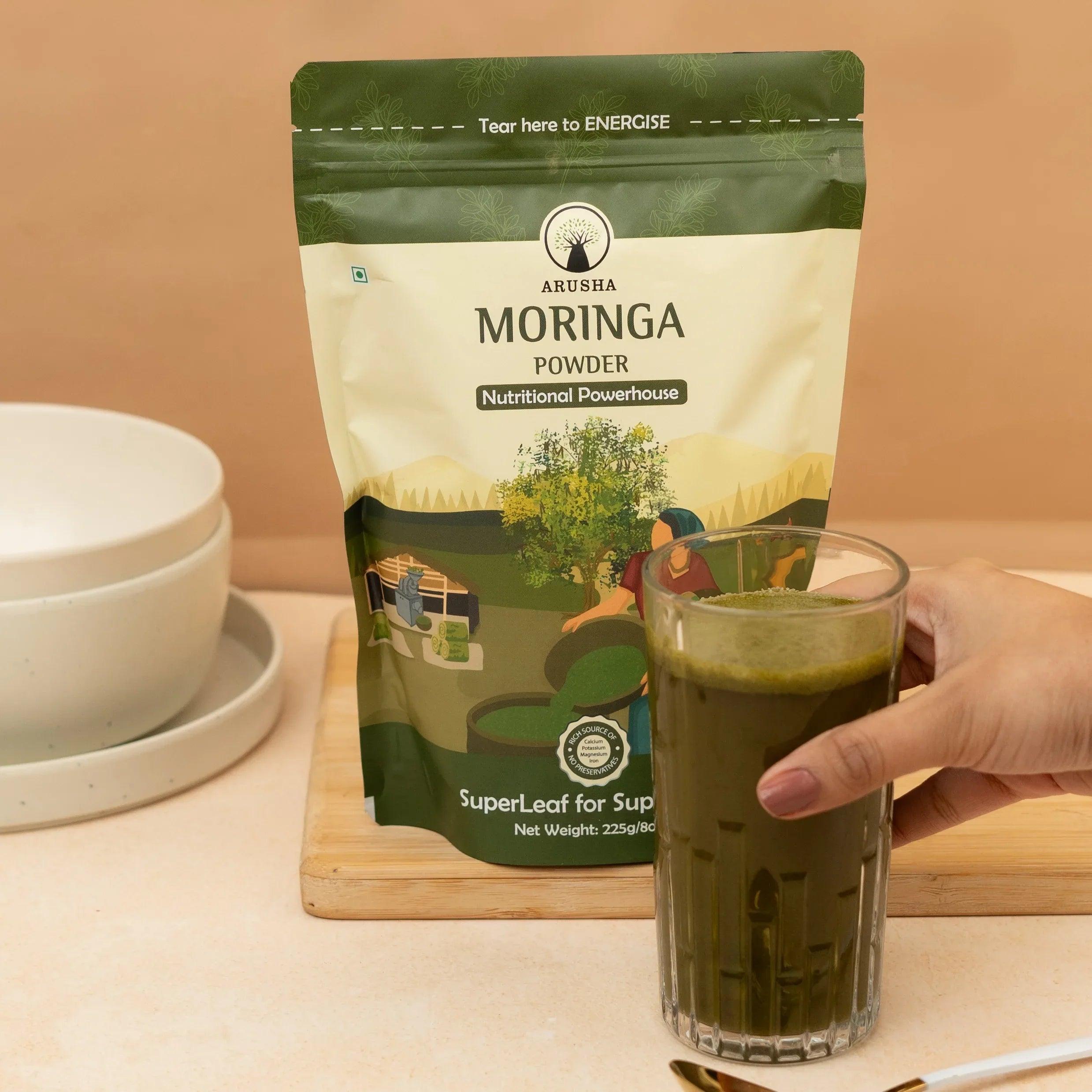
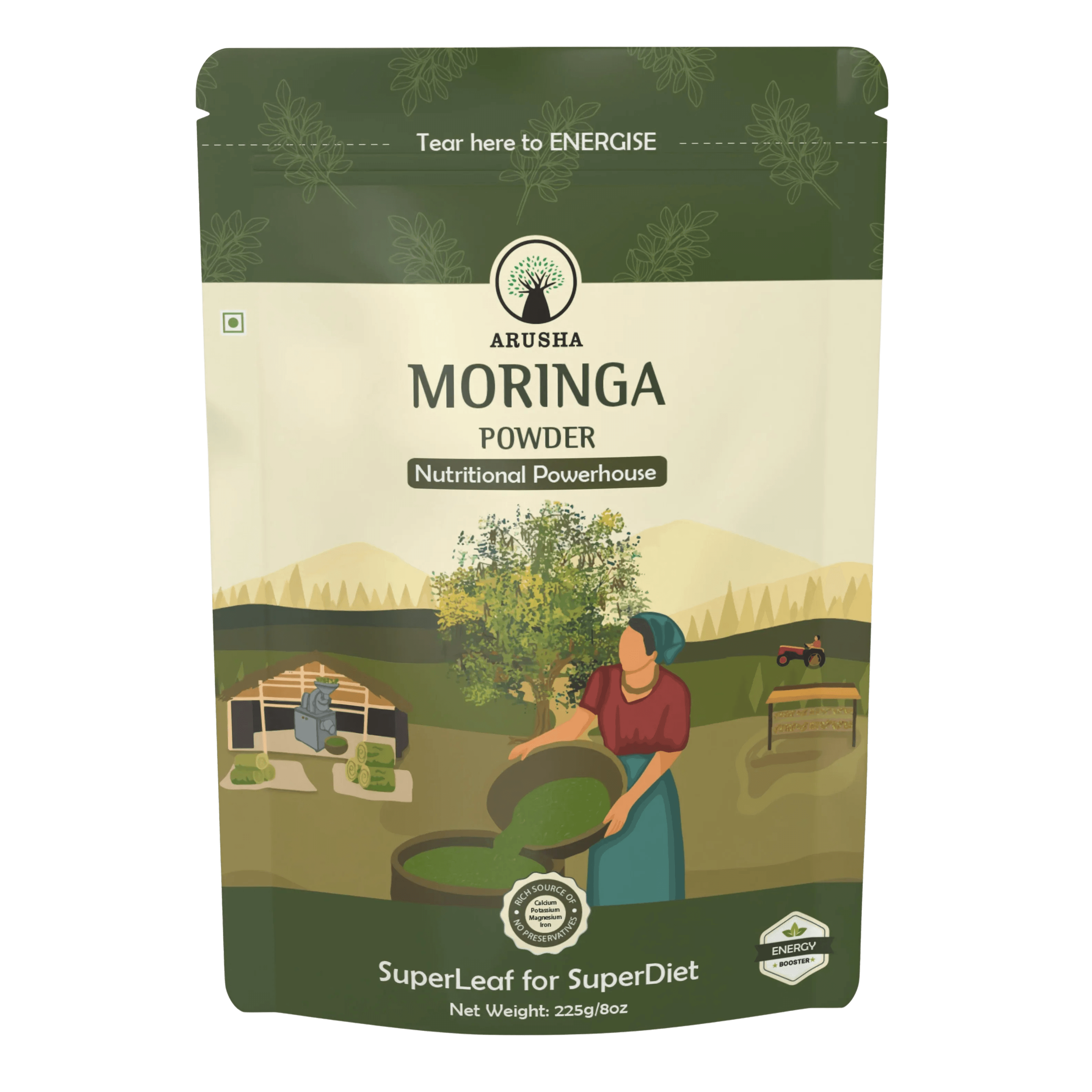
- Dried leaf powder
- Herbal decoctions
Ayurveda emphasizes consistency rather than high dosage. Small daily use supports gradual balance and long-term heart health.
Is Moringa Seed Good for High Blood Pressure?
Many people ask, is moringa seed good for high blood pressure?
Moringa seeds are potent. They are rich in bioactive compounds and healthy fats. However, Ayurveda advises caution.
Key points:
- Seeds are stronger than leaves
- Overuse may disturb digestion
- Best used only under guidance
For most people with high blood pressure, moringa leaves are safer than seeds for daily use.
Moringa Dosage for High Blood Pressure (Ayurvedic Guidance)
The right moringa dosage for high blood pressure depends on body type, digestion, and lifestyle.
General Ayurvedic guidance:
- Moringa leaf powder: ½ to 1 teaspoon per day
- Best taken with warm water
- Prefer morning or early evening
- Avoid taking moringa on an empty stomach if digestion is weak
Always remember: Ayurveda focuses on personalised dosage, not one-size-fits-all.
How to Use Moringa Safely for Blood Pressure Support
For best results:
- Choose clean, naturally dried moringa leaves
- Avoid excessive capsules without guidance
- Combine with salt control and daily walking
- Maintain regular sleep and stress management
Moringa works best as a supportive herb, not a replacement for prescribed treatment.
Ayurvedic View on Lifestyle Along with Moringa
Ayurveda never recommends herbs alone. For managing high blood pressure:
- Eat freshly cooked food
- Reduce fried and packaged foods
- Practice slow breathing
- Maintain a calm daily routine
Moringa complements these habits by nourishing the system gently.
Final Ayurvedic Insight
Moringa is not a quick fix. It supports balance, nourishment, and long-term wellness.
When used correctly, moringa and high blood pressure management can work together naturally, safely, and sustainably.
For reliable, quality moringa products, always choose trusted sources like ArushaFoods, where purity and traditional wisdom are respected.
References
- https://pmc.ncbi.nlm.nih.gov/articles/PMC11990149/
- https://www.sciencedirect.com/science/article/pii/S0753332225006948
- https://journals.ipinnovative.com/ijcap/archive/volume/5/issue/3/article/22548/pdf
FAQ
Question : Is moringa good for high blood pressure?
Answer: Yes, moringa is considered supportive for high blood pressure. Moringa helps relax blood vessels, supports circulation, and reduces oxidative stress. It works gently and supports balance when used regularly with a healthy lifestyle.
Question : Can moringa leaves reduce high blood pressure naturally?
Answer: Moringa leaves may help support normal blood pressure levels over time. They contain potassium, antioxidants, and natural plant compounds that support heart and vessel health. Results depend on consistency and overall diet.
Question : Is moringa seed good for high blood pressure?
Answer: Moringa seeds are strong in nature. They may support heart health but are not ideal for daily use without guidance. For most people, moringa leaves are safer and better for long-term blood pressure support.
Question : How should moringa be taken for high blood pressure?
Answer: Moringa is commonly taken as:
- Leaf powder with warm water
- Cooked fresh leaves as a vegetable
Ayurveda recommends small, regular doses instead of high amounts.
Question : What is the safe moringa dosage for high blood pressure?
Answer: A common Ayurvedic dosage is:
- ½ to 1 teaspoon of moringa leaf powder per day
It is best taken after food or in the morning. Dosage should be adjusted based on digestion and body type.
Question : Can I take moringa daily if I have high blood pressure?
Answer: Yes, moringa leaves can be taken daily in moderate amounts. They support nourishment and balance. If you are on blood pressure medication, consult your doctor before regular use.
Question : Does moringa increase or decrease blood pressure?
Answer: Moringa does not increase blood pressure. It supports normal blood pressure by improving circulation and vessel health. Its action is mild and balancing, not aggressive.
Question : How long does moringa take to show results for blood pressure?
Answer: Moringa works gradually. Most people notice support benefits after a few weeks of regular use. It is meant for long-term wellness, not instant results.
Question : Is moringa safe for elderly people with high blood pressure?
Answer: Yes, moringa leaves are generally safe for elderly people when taken in small amounts. Avoid seeds unless advised by a healthcare professional.
Question : Can moringa replace blood pressure medicine?
Answer : No. Moringa should not replace prescribed blood pressure medicines. It works as a supportive herb alongside medical treatment and healthy habits.