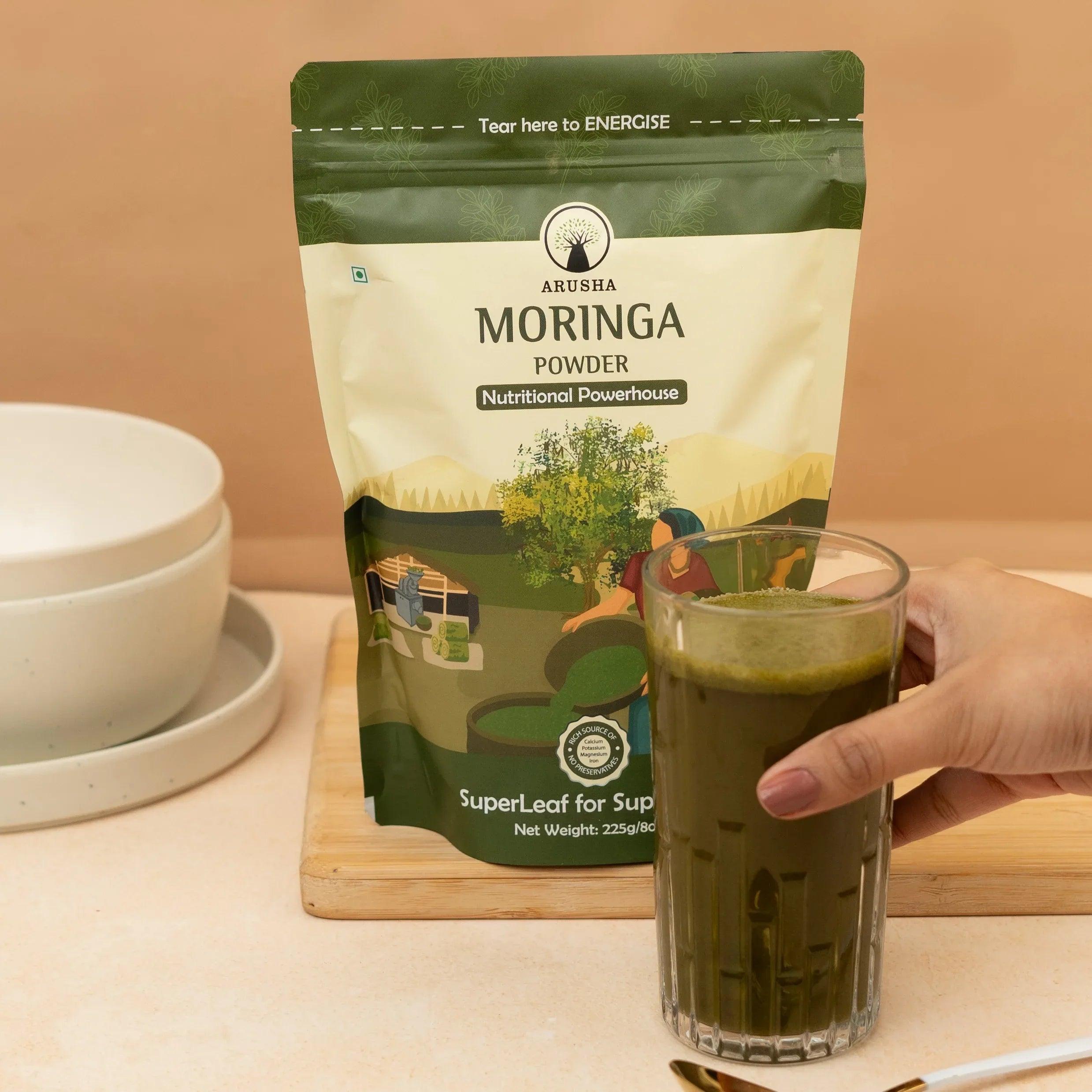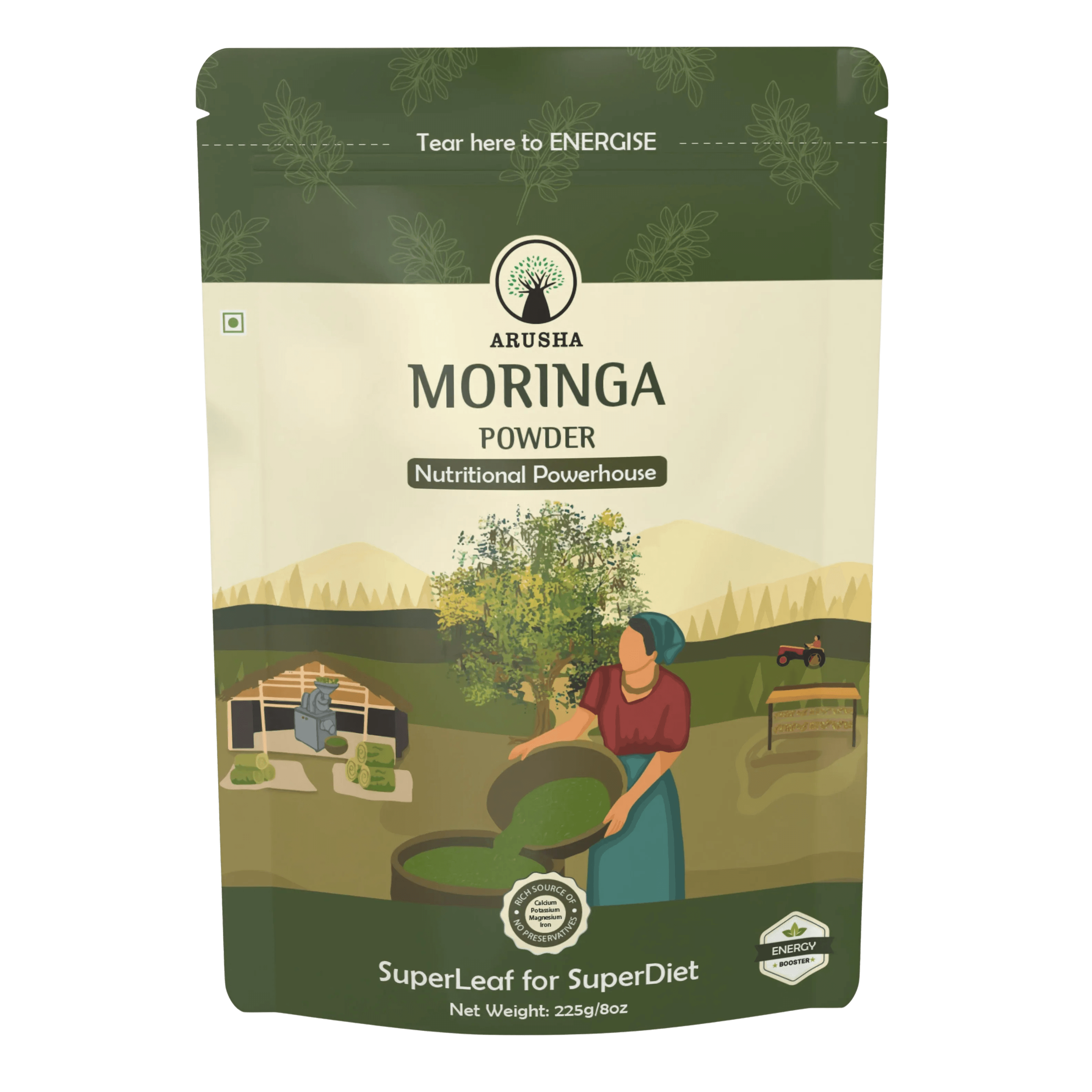

Moringa is known as a powerful superfood. But many people stop using it because of one reason — its taste.
If you have ever tried moringa powder or fresh leaves, you may have noticed a strong, bitter, earthy flavour. This taste can feel sharp at first. For some people, it even feels unpleasant.
The good news is simple. You can easily hide the taste of moringa without losing its nutrition.
This guide explains:
- What the taste of moringa is really like
- Why moringa tastes bitter
- How to hide the taste of moringa using simple Indian methods
- How to consume moringa daily without discomfort
What Is the Taste of Moringa Like?
The taste of moringa is best described as:
- Bitter
- Earthy
- Green and leafy
- Slightly pungent
Fresh moringa leaves taste similar to spinach mixed with mustard greens, but stronger.
Moringa powder has a more concentrated bitterness because the leaves are dried.
This bitterness is natural. It comes from plant compounds that are also responsible for moringa’s health value.
Why Does Moringa Taste Bitter?
Moringa tastes bitter because it contains natural bioactive compounds, such as:
- Polyphenols
- Flavonoids
- Glucosinolates
Scientific studies show that uncooked moringa leaves naturally contain these compounds, which give the plant its distinct bitter profile and antioxidant strength.
👉 This bitterness is a sign of purity, not a defect.
High-quality moringa, like clean leaf powder, often tastes stronger than low-grade or diluted products.
Is Bitter Taste in Moringa a Bad Sign?
No. In fact, it is the opposite.
A mild to moderate bitterness usually means:
- The moringa is less processed
- The leaves are rich in phytonutrients
- No artificial flavour masking is used
In Ayurveda and traditional Indian food wisdom, bitter taste is linked to detox and digestion support.
How to Hide the Taste of Moringa (Simple & Natural Ways)
You do not need sugar, chemicals, or artificial flavours. You only need the right combinations. Below are safe, practical, and Indian-friendly ways to hide the taste of moringa.
1. Mix Moringa with Lemon Juice
This is one of the easiest methods.
Why it works:
- Lemon cuts bitterness
- Citrus balances earthy flavours
- Improves palatability
How to use:
- Take ½ tsp moringa powder
- Mix in warm water
- Add fresh lemon juice
- Drink immediately
This method works well for beginners.
2. Add Moringa to Smoothies
Smoothies naturally mask strong flavours.
Best ingredients to pair with moringa:
- Banana
- Mango
- Apple
- Pineapple
Tip:
Start with a small quantity. Increase gradually. This method is ideal for people who dislike bitter drinks.
3. Use Moringa with Buttermilk or Curd
This is a traditional Indian approach.
Why it works:
- Dairy reduces bitterness
- Cooling effect balances taste
- Easy on digestion
How to use:
- Mix moringa powder into buttermilk
- Add cumin powder or roasted jeera
- Stir well and consume fresh
This is suitable for summer consumption.
4. Cook Moringa into Indian Foods
Cooking softens bitterness.
Best Indian food options:
- Dal
- Vegetable sabzi
- Soup
- Khichdi
Add moringa powder towards the end of cooking. Do not overheat. This helps retain nutrients and reduces sharp taste.
5. Combine Moringa with Honey (Occasional Use)
Honey can help beginners.
How to use:
- Mix moringa powder with honey
- Consume directly or with warm water
Use this method occasionally. It is not recommended for people managing blood sugar.
How Much Moringa Should You Take to Avoid Strong Taste?
Taste often feels strong because of excess quantity.
Recommended starting dose:
- ½ to 1 teaspoon per day
Once your body adapts, you can increase slowly. Consistency matters more than quantity.
Does Quality of Moringa Affect Taste?
Yes, very much.
High-quality moringa:
- Tastes fresh, not stale
- Has clean green aroma
- Does not taste sour or burnt
Poor quality moringa may taste:
- Extremely bitter
- Dusty
- Unpleasantly sharp
At Arusha Foods, moringa is sourced and processed carefully to maintain natural balance without harshness.
Who Should Be Careful with Moringa Taste?
You should start slow if:
- You are new to moringa
- You have a sensitive stomach
- You dislike bitter foods
Always consume moringa with food or liquids. Avoid taking it on an empty stomach if taste bothers you.
Final Thoughts: Bitter Does Not Mean Bad
The taste of moringa may be bitter. But bitterness does not mean it is harmful.
It means:
- The plant is powerful
- The nutrients are intact
- The product is less processed
With the right method, you can hide the taste of moringa easily and make it part of your daily routine.
Choose smart combinations. Start small. Stay consistent. That is how moringa works best.