
When it comes to boosting energy, strengthening immunity, and adding more nutrition to your daily routine, two supergreens often come up: Moringa and Wheatgrass. But which one is truly better for you? If you’re confused about wheatgrass vs moringa, you’re not alone. Thousands of people search online every day to understand their benefits, differences, and which supergreen fits best into their lifestyle.
At Arusha Foods, we believe in empowering our community with knowledge so you can make the healthiest choices for your wellbeing. Let’s break it down.
What Makes a Food a “Supergreen”?
Before comparing wheatgrass vs moringa, it's important to know what makes a green food a supergreen. Supergreens are nutrient-dense plant foods loaded with vitamins, antioxidants, minerals, and phytonutrients that support your overall wellness.
Both moringa and wheatgrass fall into this category, but they are NOT the same. Their nutritional profiles, taste, benefits, and daily uses differ a lot.
What is Moringa?
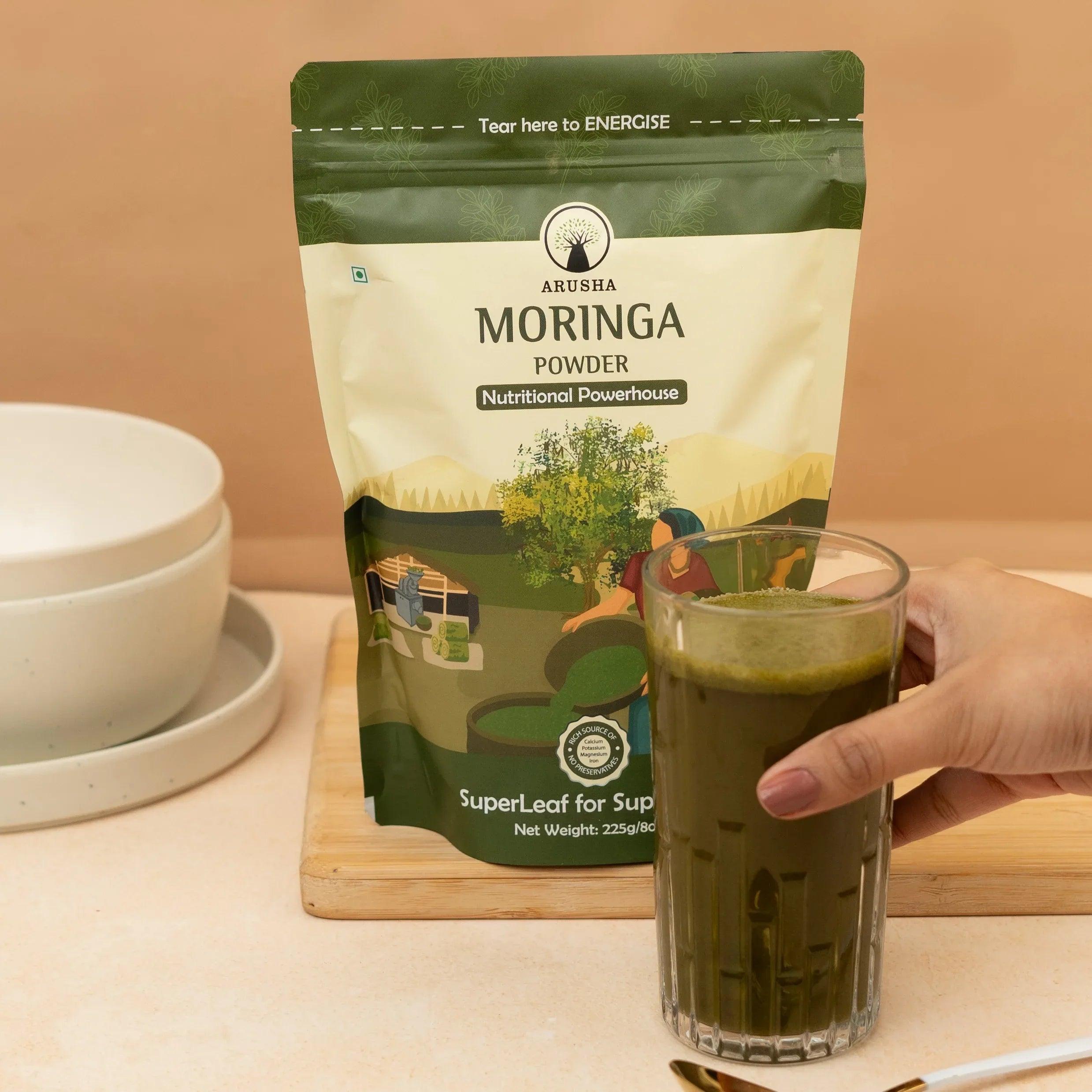
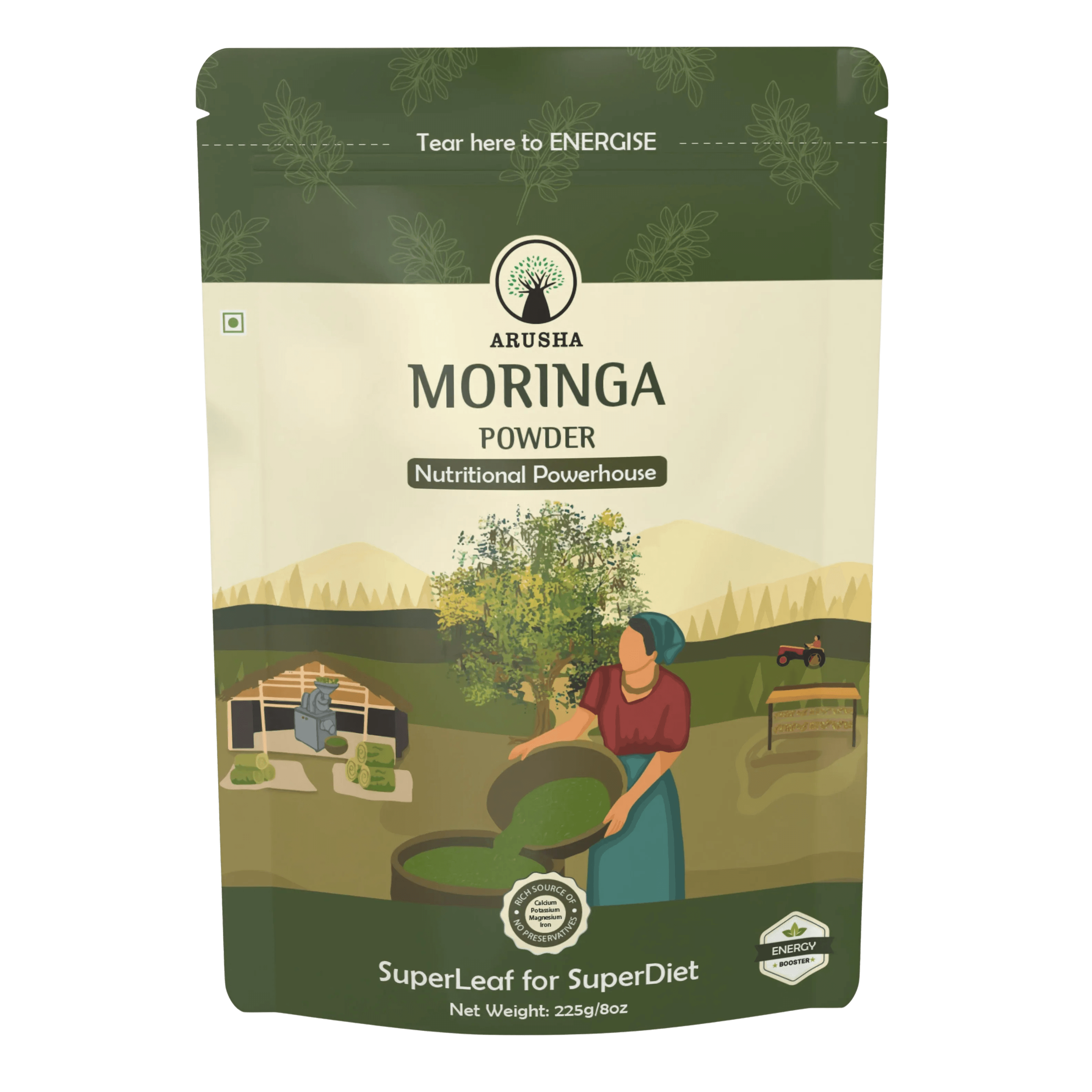
Moringa, often called the “Miracle Tree”, grows widely in India and is celebrated in Ayurveda for its healing properties. Its leaves are dried and turned into powder, giving you a rich source of nutrients in every spoon.
What is Wheatgrass?
Wheatgrass is made from the young leaves of the wheat plant. It is known for its detox abilities and extremely high chlorophyll content, which helps cleanse the body naturally.
Also Read: Benefits of Wheatgrass Powder
Overview
| Feature | Moringa | Wheatgrass |
|---|---|---|
| Botanical Name | Moringa oleifera | Triticum aestivum |
| Origin | India, Africa, Southeast Asia | Widely cultivated globally |
| Form Used | Leaf powder, capsules | Juice, powder |
| Flavor | Earthy, slightly bitter | Grassy, slightly sweet |
Local Names in India
| Language | Moringa | Wheatgrass |
|---|---|---|
| Hindi | सहजन (Sahjan), मुनगा (Munga) | गेहूं घास (Gehu Ghaas) |
| Marathi | शेवगा (Shevga) | गव्हाच्या गवत (Gavhāchyā Gavat) |
| Tamil | முருங்கை (Murungai) | கோதுமை புல் (Kothumai Pul) |
| Kannada | ನಗ್ಗೆಕಾಯಿ (Nuggekaayi) | ಗೋಧಿ ಹುಲ್ಲು (Gōdhi Hullū) |
| Malayalam | മുരിങ്ങ (Muringa) | ഗോധുമ പുല്ല് (Gothuma Pullu) |
| Telugu | మునగ (Munaga) | గోధుమ గడ్డి (Godhuma Gaddi) |
| Bengali | সজনে ডাটা (Sojne Data) | গম ঘাস (Gom Ghash) |
| Odia | ସଜନା (Sajana) | ଗହମ ଘାସ (Gahama Ghaasa) |
| Gujarati | સરગવો (Saragvo) | ઘઉં ઘાસ (Ghau Ghaas) |
| Punjabi | ਸੇੰਜਣ (Senjan) | ਗੇਹੂੰ ਦੀ ਘਾਸ (Gehun di Ghaas) |
| Assamese | সজনা (Sojna) | গহুম ঘাঁহ (Gahum Ghaah) |
| Urdu | سہجن (Sahjan) | گندم گھاس (Gandum Ghaas) |
Benefits
| Health Benefit | Moringa | Wheatgrass |
|---|---|---|
| Rich in Vitamins A, C, E | ✔️ | ✔️ (less than Moringa) |
| All essential amino acids | ✔️ | ✔️ |
| Antioxidant power | ⭐⭐⭐⭐ | ⭐⭐⭐ |
| Anti-inflammatory | ✔️ | ✔️ |
| Supports immunity | ✔️ | ✔️ |
| Boosts energy | ✔️ | ✔️ |
| High chlorophyll (detox) | Moderate | Very High |
| Digestive support | Moderate | Excellent |
| Liver detoxification | Moderate | Excellent |
Nutritional Comparison (per 100g)
| Nutrient | Moringa | Wheatgrass |
|---|---|---|
| Protein | 9.4g | 1.3g |
| Vitamin A | 7564 IU | 281 IU |
| Vitamin C | 220mg | 3mg |
| Calcium | 185mg | 24mg |
| Iron | 4mg | 0.6mg |
| Antioxidants | Very High | High |
| Chlorophyll | Moderate | Very High |
Which One Should You Choose?
| Goal | Best Option |
|---|---|
| Boost overall nutrition | Moringa |
| Detox and cleanse | Wheatgrass |
| Improve digestion | Wheatgrass |
| Increase protein intake | Moringa |
| Maximize antioxidants | Moringa |
| Alkalize the body | Wheatgrass |
| Best of both worlds | Use both together! |
How to Use Moringa & Wheatgrass (Arusha Foods)
| Method | Moringa | Wheatgrass |
|---|---|---|
| Smoothies | ✔️ | ✔️ |
| Warm water with lemon | ✔️ | ✔️ |
| Salads, soups | ✔️ | Not recommended |
| Juicing | Not ideal | ✔️ |
| Energy bars/snacks | ✔️ | ✔️ |
Final Thoughts
Both Moringa and Wheatgrass are powerful supergreens, each offering unique benefits. Moringa Powder is ideal if you want to boost your immunity, energy, and overall wellness, while the best Wheatgrass Powder supports detoxification, digestion, and maintaining a healthy, alkaline body.
At Arusha Foods, we take pride in delivering premium, 100% natural, sun-dried supergreens that are carefully sourced for quality and potency. Whether you choose Moringa, Wheatgrass, or both, you can trust that you’re nourishing your body with the best nature has to offer.
Buy your Moringa Powder or the best Wheatgrass Powder today and give your health a full-spectrum superfood boost, naturally, safely, and effectively. Make your daily wellness journey simpler and more powerful with Arusha Foods.
FAQ
1. Is Moringa better than Wheatgrass?
Moringa offers more protein, vitamins, and minerals, while Wheatgrass excels in chlorophyll and detox benefits. The better option depends on your health goals.
2. Can I take Moringa and Wheatgrass together?
Yes, combining Moringa and Wheatgrass can enhance overall nutrition and health benefits, offering a balanced intake of antioxidants, proteins, and detoxifiers.
3. What is the best time to consume Moringa or Wheatgrass?
Morning is ideal, especially on an empty stomach. It maximizes absorption and kick starts your metabolism for the day.
4. Are there any side effects of Moringa or Wheatgrass?
They are generally safe, but high doses may cause digestive discomfort. Start small and consult a doctor if pregnant or under medication.
5. Which is better for weight loss—Moringa or Wheatgrass?
Both can support weight loss, but Wheatgrass may have a slight edge due to its detoxifying and appetite-controlling properties.
6. Do Moringa and Wheatgrass have protein?
Yes. Moringa has significantly more protein, making it a better choice for vegetarians or those looking to build muscle naturally.
7. Can I mix Moringa or Wheatgrass in smoothies?
Absolutely! Both powders blend well with smoothies, juices, and even soups, offering a convenient nutrition boost.