
Superfood powders have become a daily ritual for people who want more nutrition from fewer ingredients, and two African-origin favourites keep coming up in the same breath: baobab and moringa. Both are sold as simple, single-ingredient powders. Both are backed by a growing body of nutrition research. And both are proudly part of the Arusha Foods range.
But they come from different parts of the plant, offer different nutrients, and suit slightly different goals. This guide breaks down the benefits, nutrition, and key differences between baobab and moringa so you can decide which one—or whether both—belongs in your routine.
What Is Baobab Powder?
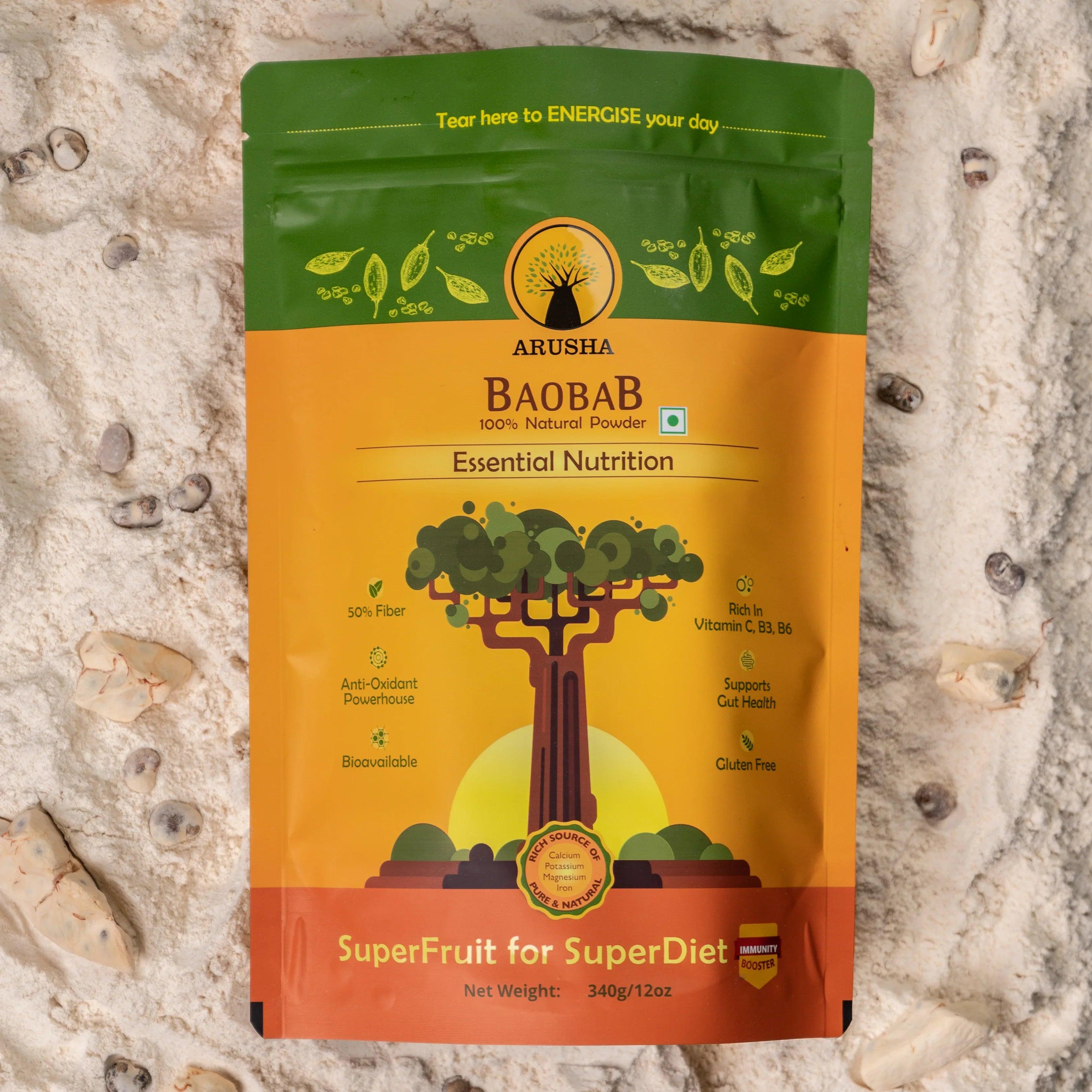
Baobab powder is made from the fruit pulp of Adansonia digitata, the iconic African "Tree of Life." Baobab fruit is unusual in that it dries naturally on the branch, so the pulp inside the hard shell can simply be scooped out, sieved, and turned into a fine, tangy powder with no cooking, drying, or added ingredients involved.
Research on baobab pulp collected across Africa consistently points to the same standout nutrient: vitamin C. A review of baobab food products found that around 40 grams of pulp can cover 84% or more of the recommended daily vitamin C intake for pregnant women, and pulp samples analysed in Kenya averaged 175 mg of vitamin C per 100 g—among the highest levels reported for any commonly eaten fruit.
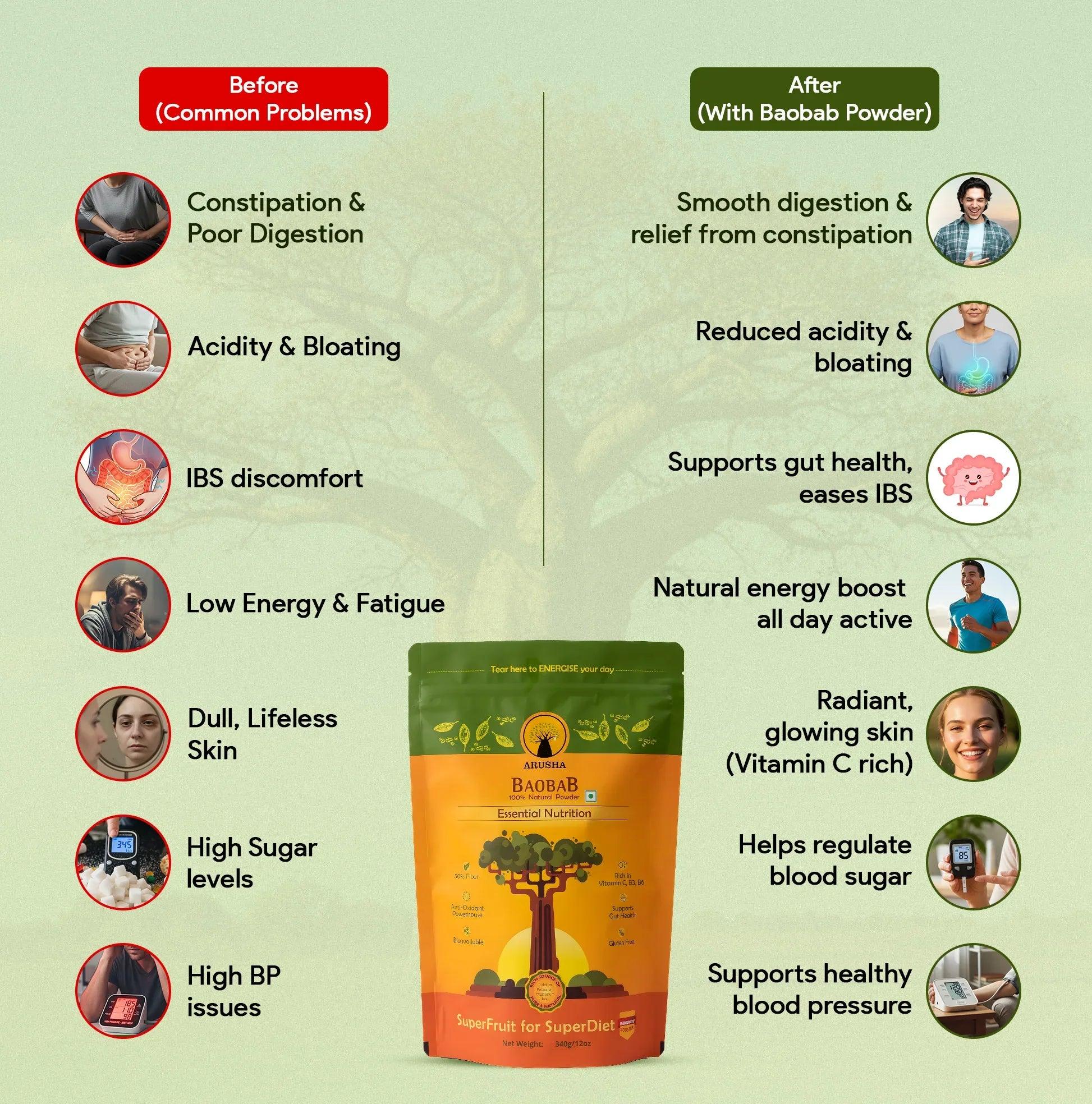
Baobab pulp is also unusually rich in dietary fibre, with reported values in some samples exceeding 50 g per 100 g, alongside meaningful amounts of potassium, calcium, magnesium, and a notable antioxidant capacity from its polyphenol content.
This is reflected in Arusha Foods' own Baobab Powder, made from a single ingredient with no preservatives, and formulated to deliver roughly 50% dietary fibre along with vitamin C, B-vitamins, potassium, and magnesium in every serving.
What Is Moringa Powder?
Moringa powder comes from the dried, ground leaves of Moringa oleifera, often called the "Miracle Tree" for how much nutrition it packs into a small serving. Unlike baobab, which uses the fruit, moringa powder is a leafy-green product—closer in spirit to spirulina or wheatgrass, but with its own distinct nutrient signature.
Nutrition reviews of moringa leaves report protein levels that are unusually high for a leafy vegetable, typically in the range of 20–35% by dry weight, along with a full spread of essential amino acids.
Moringa leaves are also a well-documented source of iron, calcium, magnesium, and potassium, plus vitamins A and C, and plant compounds such as isothiocyanates, flavonoids, and phenolics that contribute to its antioxidant and anti-inflammatory reputation.
Human studies referenced in nutrition literature have linked regular moringa leaf powder intake to measurable reductions in fasting blood sugar and support for haemoglobin levels, which is part of why it is widely used as a general wellness and anaemia-support supplement in traditional African and Asian medicine.
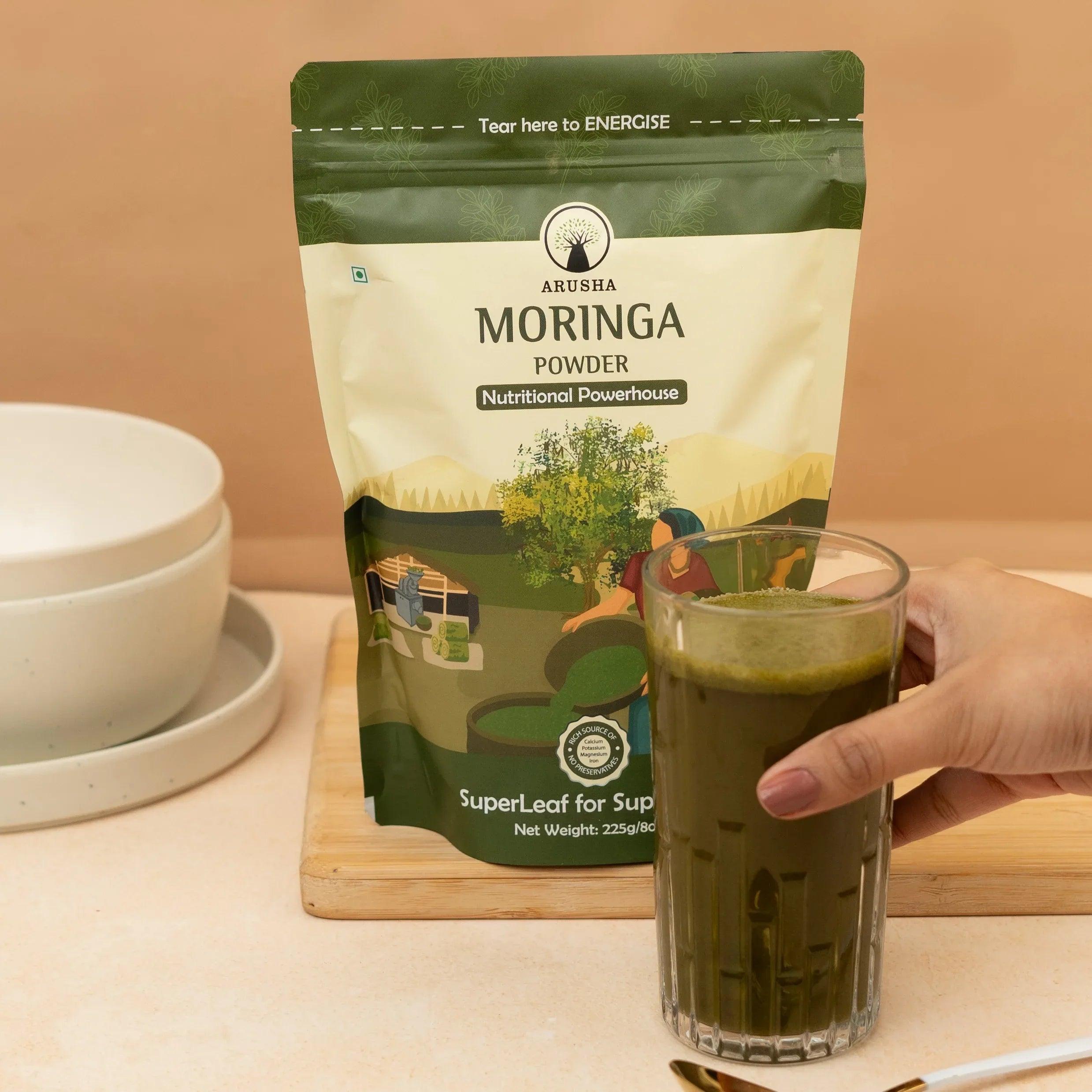
Arusha Foods' Moringa Powder is made from sun-dried Moringa oleifera leaves, positioned to support liver health, weight management, immunity, and everyday nutrient gaps as part of a balanced diet.
Baobab vs Moringa: Nutrition and Benefits Comparison
Here's a side-by-side look at how the two superfoods compare, based on the nutrient profiles most consistently reported in peer-reviewed research on Adansonia digitata and Moringa oleifera.
| Aspect | Baobab Powder | Moringa Powder |
|---|---|---|
| Botanical Source | Fruit pulp of the baobab tree (Adansonia digitata), Africa's "Tree of Life" | Leaves of the moringa tree (Moringa oleifera), the "Miracle Tree" |
| Plant Part Used | Dried, powdered fruit pulp | Dried, powdered leaves |
| Signature Nutrient | Vitamin C and dietary fibre | Plant protein and Vitamin A |
| Vitamin C | Very high—among the richest natural sources of vitamin C. | Present, but considerably lower after drying. |
| Protein | Low in the fruit pulp. | High for a leafy food with essential amino acids. |
| Fibre | Very high—roughly half the powder by weight. | Moderate. |
| Key Minerals | Potassium, calcium, magnesium, iron. | Calcium, iron, magnesium, potassium. |
| Antioxidant Profile | High due to vitamin C and polyphenols. | High due to flavonoids, carotenoids, and polyphenols. |
| Taste | Tangy, citrus-like, slightly sweet-sour. | Earthy, grassy, matcha-like. |
| Traditionally Used For | Digestive comfort, immunity, skin health, energy. | General nourishment, anaemia support, metabolic and hormonal balance. |
| Best Paired With | Water, citrus juices, smoothies, yoghurt. | Smoothies, soups, dals, batters. |
Key Differences at a Glance
- Plant Part: Baobab powder is made from fruit pulp, while moringa powder comes from leaves.
- Vitamin C vs Protein: Baobab is naturally rich in vitamin C and fibre, whereas moringa provides more protein and essential amino acids.
- Taste & Uses: Baobab has a tangy citrus flavour ideal for drinks and smoothies. Moringa has an earthy flavour suited to soups, dals, and savoury recipes.
- Traditional Focus: Baobab is commonly used for digestion, immunity, and skin health, while moringa is valued for nourishment, energy, and hormonal balance.
- Who Benefits Most: Baobab is ideal for increasing fibre and vitamin C intake. Moringa suits people seeking plant protein, iron, and a broader micronutrient profile.
Can You Take Baobab and Moringa Together?
Yes. The two superfoods complement each other because their nutritional strengths are different. Baobab's vitamin C can improve the absorption of non-heme iron found in moringa leaves, making them a practical pairing.
A simple approach is to add one teaspoon of moringa to a smoothie or savoury meal, and one teaspoon of baobab to water, juice, or yoghurt later in the day.
Choosing the Right Superfood for Your Goals
-
Choose Baobab Powder if your priority is:
- Gut health
- Digestive comfort
- Immunity
- Healthy skin
- Natural vitamin C and fibre
-
Choose Moringa Powder if your priority is:
- Plant protein
- Iron intake
- Energy
- Everyday micronutrient support
- Vegetarian or vegan nutrition
-
Choose Both if you want:
- Vitamin C
- Dietary fibre
- Plant protein
- Iron
- Powerful antioxidants
The Arusha Foods Promise
Every Arusha Foods superfood powder contains just one ingredient—no preservatives, fillers, or additives. Both Baobab Powder and Moringa Powder are sustainably sourced and lab-tested for quality, ensuring you know exactly what you're adding to your daily routine.
Shop the range:
Final Word
Baobab and moringa are not competitors—they're complementary superfoods. Baobab stands out for its fruit-derived vitamin C and fibre, while moringa excels with its leaf-based protein, iron, and micronutrients.
Whichever you choose, look for a single-ingredient, sustainably sourced powder, and consider incorporating both into your weekly routine for broader nutritional support.
Explore both superfoods at arushafoods.in.