
If you've shopped for maca powder, you've probably noticed it doesn't come in just one kind. Peruvian maca (Lepidium meyenii) grows in a whole spectrum of natural colours, and the three most widely studied are yellow, red, and black maca. They belong to the same species, grown in the same high-altitude Andean soil—yet each has its own colour, flavour, and area of scientific interest.
At Arusha Foods, our philosophy is "Power of Food as Medicine", and maca is a perfect example of that philosophy: one root, three unique nutritional profiles. This guide explains the differences between yellow, red, and black maca, what current scientific research says about each, and how to choose the variety that best suits your wellness goals.
What Is Maca?
Maca (Lepidium meyenii) is a hardy root vegetable cultivated at elevations above 4,000 metres in the Peruvian Andes. It belongs to the cruciferous vegetable family, making it a close relative of broccoli, cabbage, cauliflower, and radish.
For more than 2,000 years, Andean communities have consumed maca as both a nourishing food and a traditional source of stamina, helping people adapt to the demanding conditions of high-altitude living.
Botanically, researchers have identified between 13 and 17 naturally occurring colour phenotypes of maca, including white, cream, yellow, grey, purple, red, and black. However, nearly all commercial products and scientific studies focus on the three primary varieties:
- Yellow Maca
- Red Maca
- Black Maca
A 2024 scientific review concluded that these three colour varieties currently have the strongest body of nutritional, preclinical, and clinical research.
Yellow, Red & Black Maca Comparison
| Feature | Yellow Maca | Red Maca | Black Maca |
|---|---|---|---|
| Approx. Harvest Share | 50–60% | 20–25% | 10–15% (Rarest) |
| Flavour | Mild, nutty, slightly sweet | Sweeter and smoother | Rich, nutty, butterscotch-like |
| Main Pigments | Carotenoids | Anthocyanins | Anthocyanins + Higher Polyphenols |
| Most Studied For | General nutrition, libido, menopause | Women's health, prostate support, bone health | Energy, stamina, memory, male fertility |
| Typical Price | Standard | Mid-range | Premium |
Note: Harvest percentages and pricing vary depending on season, cultivation practices, and processing methods.
Yellow Maca: The Everyday All-Rounder
Yellow maca is the most abundant variety, accounting for approximately half of Peru's annual maca harvest. Its mild, nutty flavour makes it the easiest variety to include in smoothies, oatmeal, yoghurt, coffee, or baking recipes.
Since it is the most commonly cultivated variety, yellow maca has also been investigated in the greatest number of human clinical studies.
Research Areas for Yellow Maca
- Supports healthy libido in both men and women.
- May help improve menopausal comfort, including mood and hot flashes.
- Provides natural carbohydrates for daily nourishment.
- Contains vitamin C, iron, copper, and potassium.
- Suitable for everyday wellness routines.
If you're trying maca for the first time, yellow maca is generally considered the best place to start because of its balanced flavour and broad nutritional profile.
Red Maca: Studied for Women's Health, Prostate & Hormonal Balance
Red maca is less common than yellow maca and has a naturally sweeter flavour. Its vibrant colour comes from naturally occurring anthocyanins, antioxidant compounds also found in berries and red grapes.
Red maca also contains one of the highest concentrations of glucosinolates among all maca phenotypes, giving it a distinctive phytochemical profile that has attracted considerable scientific interest.
Women's Health & Menopausal Wellbeing
Red maca has become one of the most researched maca varieties for women's wellness, particularly during menopause. Unlike hormone replacement therapy, maca does not contain hormones. Instead, researchers believe it may support the body's natural hormonal balance.
Clinical studies have reported improvements in:
- Hot flashes
- Night sweats
- Mood and emotional wellbeing
- Energy levels
- Sexual desire
- Overall quality of life
- Sleep quality in some participants
Prostate Health Research
Red maca has also been extensively studied in animal models for prostate health. Research consistently suggests that red maca may support healthy prostate size more effectively than yellow or black maca under similar experimental conditions.
Scientists have also investigated its potential role in supporting bone health, antioxidant activity, and healthy ageing.
Important: Most evidence regarding prostate and bone health comes from animal studies. More large-scale human clinical trials are needed before firm conclusions can be made.
Bone Health Support
Bone health becomes increasingly important after menopause due to the natural decline in estrogen levels. Among all maca varieties, red maca has consistently demonstrated the strongest potential for supporting bone health in preclinical research.
Animal studies have reported improvements in bone mineral density and markers associated with healthy bone formation, suggesting that red maca may contribute to maintaining skeletal health as women age.
While these findings are promising, larger human clinical studies are still needed before definitive conclusions can be drawn.
Ovarian & Reproductive Health
Researchers have also explored the potential role of red maca in supporting female reproductive wellness. Experimental studies indicate that red maca may help:
- Support healthy ovarian function
- Protect ovarian tissue from oxidative stress
- Promote reproductive wellness through antioxidant activity
- Support overall reproductive vitality
Most of this evidence currently comes from laboratory and animal studies, meaning additional human research is required to confirm these potential benefits.
Rich in Protective Plant Compounds
Red maca contains a diverse range of naturally occurring plant compounds that contribute to its antioxidant profile, including:
- Anthocyanins
- Glucosinolates
- Polyphenols
- Flavonoids
These bioactive compounds help protect cells from oxidative stress and support healthy ageing. According to recent phytochemical research, red maca generally contains the highest concentration of glucosinolates among the major maca varieties, giving it a unique nutritional profile compared with yellow and black maca.
Black Maca: The Rarest & Most Prized Variety
Black maca is the rarest of the three major maca varieties and is often referred to as "Peruvian Ginseng" because of its long-standing reputation for promoting stamina, endurance, and vitality. It has a richer, deeper flavour with nutty, caramel-like, and butterscotch notes.
Scientific research has primarily focused on black maca for:
- Energy, stamina, and physical performance
- Memory, learning, and mental focus
- Male fertility and semen quality
- Mood balance and emotional wellbeing
Energy & Physical Performance
Traditional accounts describe Inca warriors consuming maca before battle to enhance endurance. Today, black maca remains popular among athletes, fitness enthusiasts, and active individuals seeking natural support for stamina and performance.
Memory & Cognitive Function
Animal studies and a growing number of human investigations suggest black maca may support learning ability, memory, concentration, and mental performance.
Male Fertility Support
Black maca has been extensively researched for reproductive health. Reviews of human clinical studies suggest that consistent supplementation for approximately 8–12 weeks may help improve several semen quality parameters in both fertile and sub-fertile men.
Mood & Emotional Wellbeing
Research also indicates that black maca's naturally occurring adaptogenic compounds may help support mood balance and emotional wellbeing, including in small studies involving postmenopausal women.
Why Do Maca Colours Differ?
Yellow, red, and black maca all belong to the same plant species (Lepidium meyenii). Their differences arise from variations in naturally occurring phytochemicals rather than being different plant species.
The primary compounds responsible include:
- Glucosinolates – Sulfur-containing compounds associated with maca's characteristic aroma. Red maca generally contains the highest levels, followed by black, while yellow typically contains the least.
- Macamides – Unique fatty-acid compounds believed to contribute to maca's adaptogenic properties and support for mood and stress response.
- Anthocyanins & Polyphenols – Powerful antioxidant pigments that create the deep red and black colours and contribute to higher antioxidant activity in darker maca varieties.
Advanced near-infrared spectroscopy research has shown that pure yellow, red, and black maca can be accurately identified based on their unique chemical fingerprints, achieving classification accuracy greater than 96%, confirming that each colour possesses its own distinctive nutritional composition.
Which Maca Should You Choose?
- Choose Yellow Maca if you're looking for an everyday nutritional superfood that supports general wellbeing, energy, mood, and menopausal comfort.
- Choose Red Maca if your primary interest is women's health, menopausal wellbeing, prostate support, or bone health. Keep in mind that much of the prostate and bone research currently comes from animal studies.
- Choose Black Maca if your goal is enhanced stamina, cognitive performance, physical endurance, or reproductive health. It currently has the strongest human research in these areas.
Many people also rotate between different maca varieties or use blended formulations to benefit from their complementary phytochemical profiles.
Regardless of the variety you choose, selecting a gelatinized, lab-tested, high-quality maca powder is important. Independent industry testing has identified adulteration with cheaper fillers such as maize and soy flour in some products, making transparency and quality assurance essential.
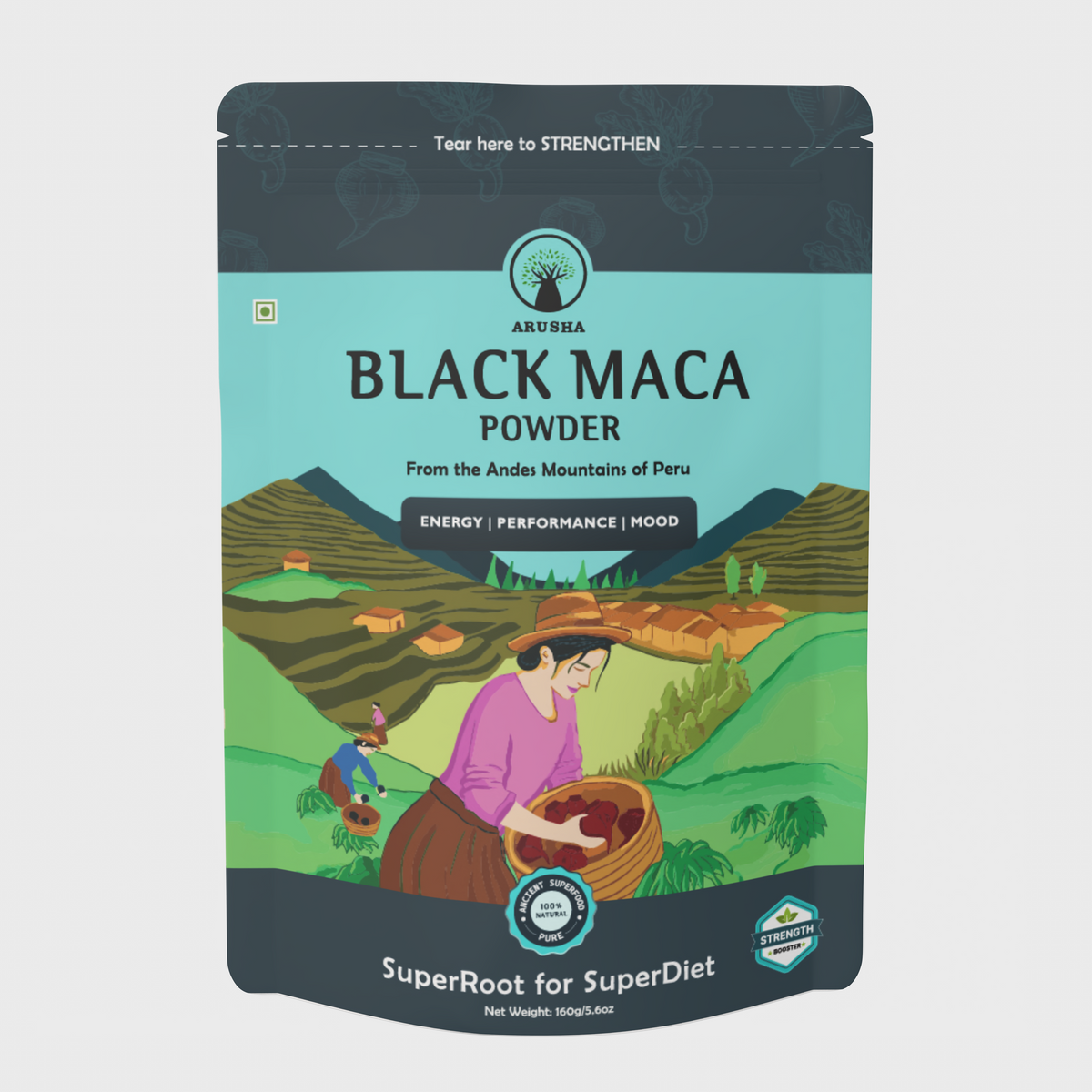
Try Arusha Foods Black Maca Powder
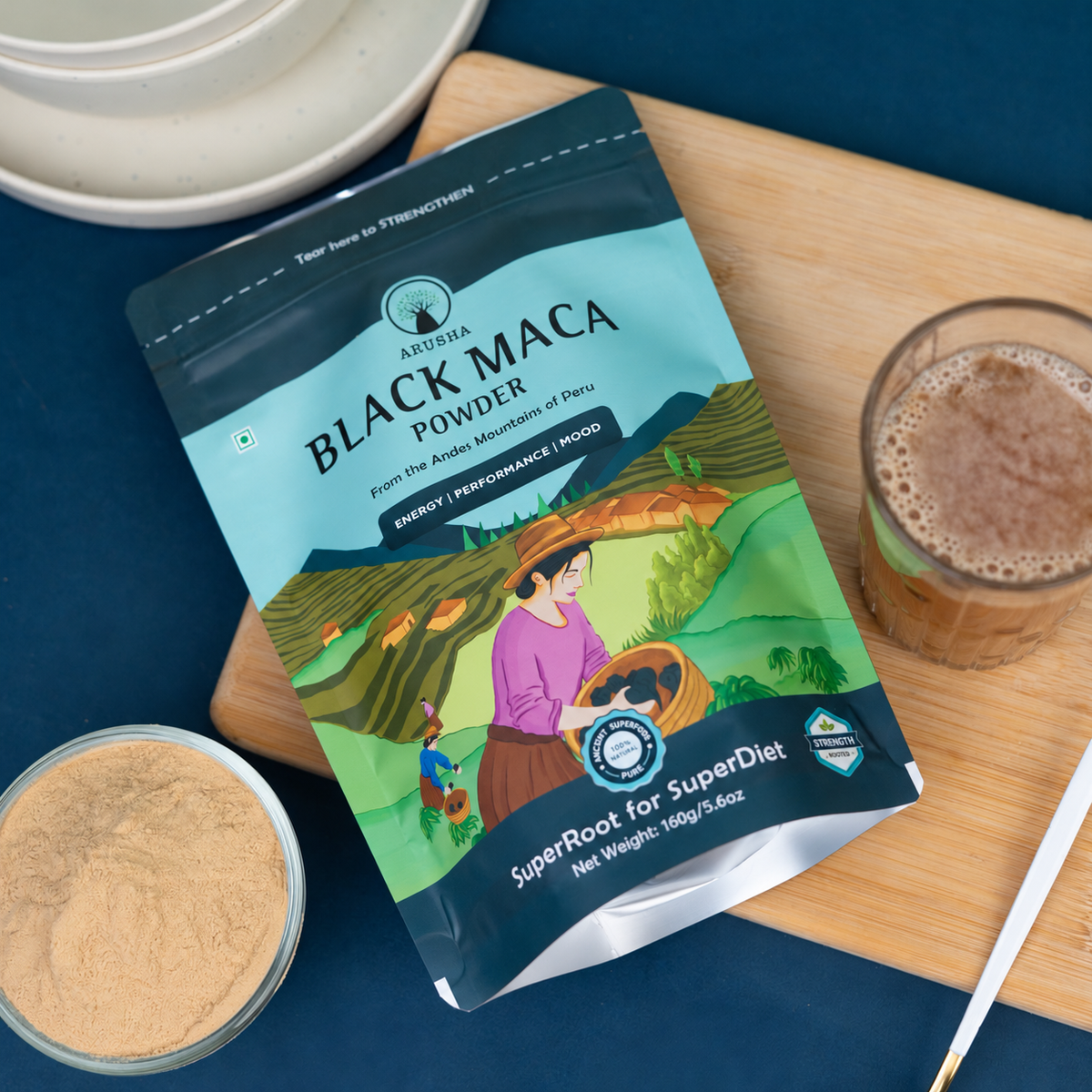
Arusha Foods Black Maca Powder is made from 100% pure gelatinized black maca, carefully processed to improve digestibility while preserving its natural nutritional profile.
Our Black Maca Powder is:
- 100% Pure Black Maca
- No Fillers
- No Added Sugar
- No Preservatives
- Vegan Friendly
- Gluten-Free
- Laboratory Tested for Quality
Simply mix one scoop (4g) into water, smoothies, yoghurt, oatmeal, or your favourite breakfast for an easy daily wellness routine.
The Bottom Line
Yellow, red, and black maca are three unique expressions of the same remarkable Andean superfood. Each variety offers a distinct combination of glucosinolates, macamides, antioxidants, and naturally occurring plant compounds that contribute to different areas of scientific interest.
- Yellow Maca: Everyday nutrition, libido, and menopausal support.
- Red Maca: Women's health, prostate research, and bone health.
- Black Maca: Energy, stamina, cognitive performance, and fertility support.
Whatever your wellness goals, choosing a pure, high-quality, gelatinized, and laboratory-tested maca powder ensures you're getting the authentic nutritional benefits of this ancient Peruvian superfood. At Arusha Foods, we're committed to delivering clean, honest nutrition guided by our philosophy: "Power of Food as Medicine."
References
- Leiva-Revilla J, et al. Not All Maca Is Created Equal: A Review of Colors, Nutrition, Phytochemicals, and Clinical Uses. PMC, 2024.
https://pmc.ncbi.nlm.nih.gov/articles/PMC10892513/ - ResearchGate. Classification of Pure Yellow, Red and Black Maca Using Near-Infrared Spectroscopy.
View Research - Examine.com. Maca Research Breakdown.
https://examine.com/supplements/maca/research/