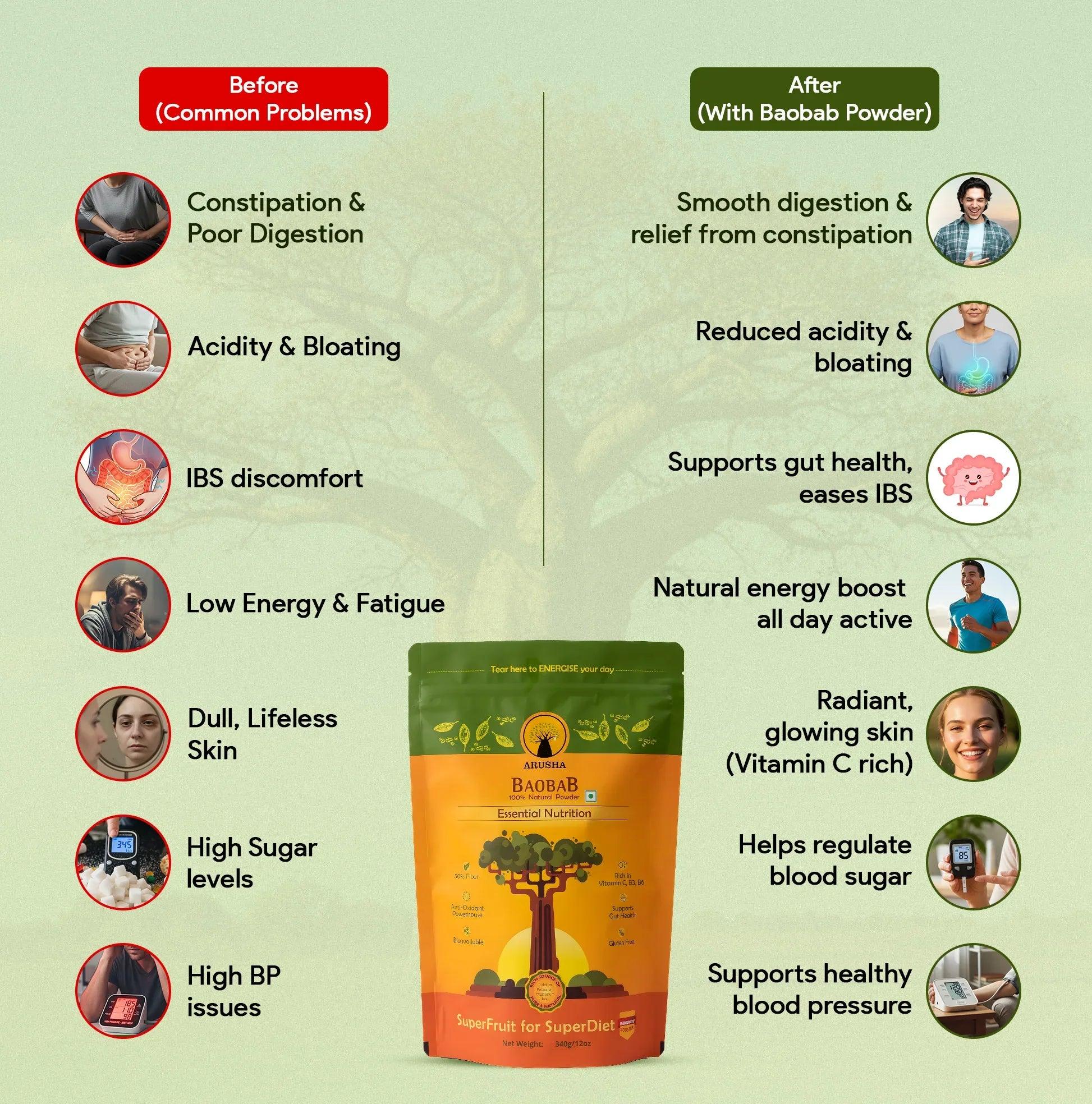

Managing blood sugar has become a daily concern for millions of people. Whether you've been diagnosed with diabetes, told you're prediabetic, struggle with energy crashes after meals, or simply want to support your long-term metabolic health, finding natural ways to keep blood sugar levels balanced is more important than ever.
While healthy eating, regular exercise, and medical guidance remain the foundation of blood sugar management, certain nutrient-rich foods can provide additional support.
One such superfruit gaining attention from both researchers and health-conscious consumers is baobab. Known as the "Tree of Life" in Africa, baobab fruit is packed with fiber, antioxidants, and beneficial plant compounds that may help reduce post-meal blood sugar spikes and support healthier glucose control. Let's explore the science behind baobab and why it may deserve a place in your daily wellness routine.
What Is Baobab Fruit?
Baobab (Adansonia digitata) is the fruit of the iconic African baobab tree, found across sub-Saharan Africa and parts of India. Unlike most fruits, baobab fruit dries naturally on the branch, producing a powdery pulp packed with:
- Dietary fiber (both soluble and insoluble)
- Vitamin C (4x more than oranges)
- Polyphenols including tannins, proanthocyanins, and flavonoids
- Calcium, potassium, iron, and magnesium
- Antioxidants with strong free-radical scavenging capacity
This remarkable nutritional profile is precisely why baobab fruit benefits for diabetes and blood sugar management are garnering significant attention from researchers and health professionals worldwide.
The Science Behind Baobab and Blood Sugar Levels
The relationship between baobab and blood sugar is not just anecdotal — it's supported by rigorous scientific research. A landmark randomized controlled trial (RCT) published in the journal Nutrients (PMC8778021) studied the effect of baobab fruit extract on postprandial (after-meal) blood glucose in 31 healthy adults.
Key Study Findings (PMC8778021)
Participants received a standard oral glucose tolerance test (OGTT), followed by 250 mL of baobab aqueous extract (BAE). The control group received glucose alone. Results were striking:
- Glycemia incremental area under the curve was significantly lower in the baobab group (p = 0.012)
- Peak glucose concentration was meaningfully reduced (p = 0.029)
- The extract showed high total phenolic content and strong antioxidant capacity
- Baobab demonstrated strong capacity to scavenge superoxide anions and nitric oxide radicals
The researchers concluded that baobab fruit shows promise as "a natural antioxidant and a hypoglycemic agent under glucose load acute conditions" — making it highly relevant for anyone managing baobab blood sugar benefits in real-life dietary settings.
How Baobab Helps Control Blood Sugar: 4 Key Mechanisms
1. Slowing Starch Digestion
Baobab is rich in high-molecular-weight tannins that interfere with starch degradation. Research from Oxford Brookes University showed that when baobab extract was consumed with white bread, it significantly reduced rapidly digestible starch — the type most responsible for sharp post-meal blood glucose spikes. This starch-slowing effect is a cornerstone of baobab glycemic control.
2. Inhibiting Digestive Enzymes
The polyphenols in baobab — especially proanthocyanins and hydrolyzable tannins — have been shown to inhibit key digestive enzymes like alpha-amylase and alpha-glucosidase. These are the very enzymes that break down carbohydrates into glucose. By slowing their activity, baobab powder blood sugar spikes become less frequent and less severe.
3. Reducing Glucose Absorption
Research suggests that baobab polyphenols may also inhibit intestinal glucose transporters (SGLT1 and GLUT2), which are responsible for absorbing glucose from the gut into the bloodstream. This provides an additional layer of blood sugar regulation beyond enzyme inhibition.
4. High Dietary Fiber Content
Baobab fruit contains approximately 50% dietary fiber by dry weight — one of the highest fiber densities of any fruit. Soluble fiber forms a gel-like layer in the intestine, dramatically slowing the absorption of glucose and contributing directly to baobab and blood sugar level stabilization throughout the day.
Baobab Fruit for Diabetes: What You Need to Know
- Low Glycemic Index: Baobab powder has a naturally low GI, meaning it releases glucose slowly and steadily.
- Post-Meal Glucose Control: Studies show significant reductions in post-meal glucose spikes when baobab is consumed alongside high-carbohydrate foods.
- Antioxidant Protection: Chronic high blood sugar generates oxidative stress. Baobab's powerful antioxidant profile helps neutralize free radicals associated with diabetic complications.
- Anti-Inflammatory Properties: The polyphenols in baobab have demonstrated anti-inflammatory effects, which are particularly relevant since chronic inflammation underlies insulin resistance.
⚠ Important Note: Baobab is a food, not a medicine. If you have diabetes, always consult your healthcare provider before making changes to your diet or supplement regimen. Do not replace prescribed medications with baobab.
Baobab Powder Blood Sugar Benefits: Why Powder Form Is Best
- Concentrated Nutrients: The drying process preserves and concentrates all the fiber, polyphenols, and vitamins in a shelf-stable powder.
- Versatile Usage: Easy to add to water, smoothies, yogurt, or sprinkle over meals.
- No Additives Needed: Pure baobab powder needs no artificial preservatives.
- Research-Validated Dosing: Clinical studies used 18.5g–37g of baobab extract in 250 mL water and saw significant glycemic benefits.
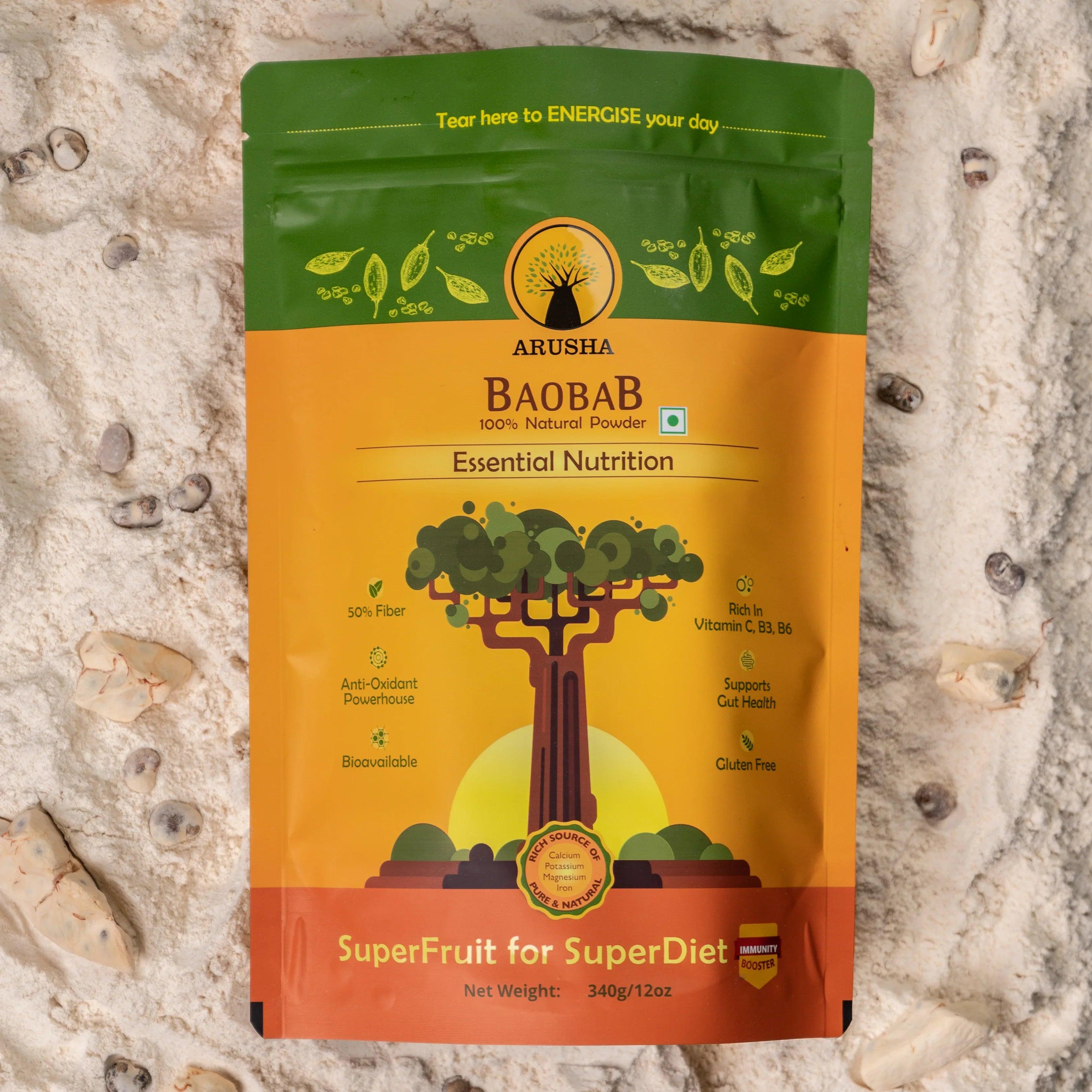
Try Arusha Foods Baobab Powder
Our baobab powder is 100% pure, sustainably sourced, and minimally processed to retain maximum nutrient potency. No additives, no fillers — just pure baobab fruit goodness.
Shop Arusha Foods Baobab Powder →
How to Use Baobab Powder for Blood Sugar Management
Before or With Meals
Mix 1–2 tablespoons (approximately 5–10g) of baobab powder in 250 mL of water and consume it just before or alongside a carbohydrate-rich meal.
In Smoothies
Add baobab powder to your morning smoothie with banana, spinach, and almond milk for a blood sugar-friendly, energizing start to the day.
Baked Into Foods
Try adding 1–2 tablespoons to chapati dough, rotis, or homemade bread for subtle but meaningful glycemic benefits.
Stirred Into Yogurt or Porridge
Stir baobab powder into plain yogurt or oat porridge for breakfast to help support balanced blood sugar levels.
Beyond Blood Sugar: Additional Health Benefits of Baobab
- Gut Health: Supports beneficial gut bacteria and a healthy microbiome.
- Immune Support: Rich in Vitamin C for immune function.
- Heart Health: Potassium and polyphenols support cardiovascular wellness.
- Weight Management: High fiber content promotes satiety.
- Bone Health: Rich in calcium for strong bones.
Who Should Consider Baobab Powder for Blood Sugar?
- Individuals with Type 2 diabetes seeking complementary nutritional support
- People with prediabetes or insulin resistance
- Health-conscious individuals wanting to reduce post-meal glucose spikes
- Those with a family history of diabetes
- Athletes and active individuals seeking stable energy levels
Conclusion: Baobab Fruit — Nature's Blood Sugar Ally
The evidence is clear: baobab fruit blood sugar benefits are real, scientifically validated, and accessible. From inhibiting digestive enzymes and slowing starch breakdown to reducing peak glucose concentrations in clinical trials, baobab offers a multi-faceted approach to glycemic control.
Adding pure baobab powder to meals or beverages may help support balanced blood sugar levels while also delivering valuable fiber, antioxidants, and essential nutrients.
References
- Adansonia digitata L. (Baobab Fruit) Effect on Postprandial Glycemia in Healthy Adults: A Randomized Controlled Trial. Nutrients, 2022. PMC8778021.
- Coe SA et al. The polyphenol-rich baobab fruit reduces starch digestion and glycemic response in humans. Nutrition Research. 2013;33(11):888–896.
FAQ
Does baobab lower blood sugar immediately?
Research shows baobab can help reduce post-meal blood sugar spikes, but it is not a rapid-acting treatment for acute hyperglycemia.
How much baobab powder should I take for blood sugar support?
1–2 tablespoons of baobab powder with water before or alongside meals is a practical starting point.
Can I use baobab powder if I'm on diabetes medication?
Consult your healthcare provider before adding baobab to your diet if you are taking blood sugar-lowering medications.
Is baobab good for Type 1 diabetes?
Current research focuses mainly on Type 2 diabetes and healthy adults. People with Type 1 diabetes should consult their healthcare team before use.
```