
Discover how organic baobab powder is made — from sustainably harvested baobab fruit to minimally processed baobab powder, and why this matters for your health and the planet.
In a world flooded with "organic" labels, it's easy to become skeptical. What does organic really mean? And why does it matter for a superfood like baobab? The answer lies in a remarkable natural phenomenon that makes the organic baobab powder sourcing story unlike any other food on earth.
Baobab is the only fruit in the world that dries naturally on the branch. It bakes under the African sun for months until its hard, coconut-like shell contains perfectly preserved, dry fruit pulp — no artificial processing, no synthetic drying agents, no chemical intervention whatsoever. This is the foundation of what makes baobab powder organic in the truest sense of the word.
In this article, we explore the full journey of how organic baobab powder is made — from ancient African trees to the pure powder in your kitchen — and why choosing sustainably harvested, minimally processed baobab powder is one of the most meaningful choices you can make for your health and the planet.
The Baobab Tree: Africa's Living Pharmacy
The baobab (Adansonia digitata) is among the most extraordinary trees on Earth. Known as the "Tree of Life," it can live for over 2,000 years and grows across sub-Saharan Africa, Madagascar, parts of India, and Australia. These trees are deeply woven into the cultural, medicinal, and nutritional heritage of the communities that live among them.
What makes baobab truly special from an organic standpoint begins long before harvest. Wild baobab trees grow without any human agricultural intervention — no pesticides, no fertilizers, no herbicides. They flourish in their natural savanna environment, fed only by rain, sun, and African soil. This is the starting point for what makes baobab powder organic.
Key Facts About the Baobab Tree
- Grows entirely wild — never farmed with synthetic inputs
- Can live 2,000+ years, making it one of the world's oldest food sources
- Found across 32 African countries plus parts of India and Australia
- Every part — fruit, leaves, bark, seeds — has traditional medicinal uses
- Requires no irrigation; thrives on natural rainfall
Nature's Own Organic Process: Why Baobab Dries on the Branch
Here is the defining feature of organic baobab powder sourcing: baobab is the only fruit in the world that dries naturally while still hanging on the tree. Most fruits rot after falling — but baobab is exceptional. Encased in a hard, woody shell, the fruit pulp bakes slowly in the African sun over several months, losing all its moisture naturally.
When harvesters crack open the shell, they find a dry, powdery pulp surrounding the seeds — completely ready for consumption, with no need for any artificial drying, heat treatment, spray drying, or chemical preservation. This is the crucial difference between baobab and virtually every other superfood powder on the market.
Baobab vs. Other Superfoods: The Organic Difference
| Superfood | Processing Required | Natural Dry Form? |
|---|---|---|
| Baobab | Crack shell, sieve, grind | ✅ Yes — dries on tree |
| Spirulina | Cultivated, spray-dried | ❌ Requires drying |
| Wheatgrass | Juiced, spray/freeze-dried | ❌ Requires drying |
| Acai Berry | Flash-pasteurized, freeze-dried | ❌ Requires drying |
| Maca Root | Harvested, sun-dried, milled | ❌ Requires drying |
How Organic Baobab Powder Is Made: Step by Step
Understanding the baobab fruit to powder process helps you appreciate why minimally processed baobab powder retains such exceptional nutritional value. The journey from tree to powder is beautifully simple — a testament to the fruit's natural perfection.
Step 1: Wild Harvesting in the African Savanna
Baobab fruits are wild-harvested — meaning they are collected from naturally growing trees in their native habitat, not from cultivated plantations. Harvesters — predominantly women in communities across Mozambique, Zimbabwe, Malawi, and other African nations — collect fallen fruits or pick them directly from the tree once fully ripened and naturally dried.
According to the KCOA (Knowledge Platform for Organic Agriculture and Agroecology in Africa), in Mozambique's Manica Province, women harvesters play a central role in sustainably harvested baobab fruit supply chains. Organizations like Baobab Products Mozambique (BPM) purchase directly from these harvesters, providing fair and significant income to rural communities. In 2019 alone, BPM purchased nearly 400 tons of baobab fruit pulp and seeds, supporting hundreds of women harvesters with meaningful livelihoods.
Step 2: Cracking the Shell
The hard, woody outer shell is cracked open — by hand or using simple tools — to reveal the dry, chalky white pulp inside. Because baobab has already dried naturally on the tree, no heat treatment or dehydration is required at this stage. The pulp is already shelf-stable and ready for processing.
Step 3: Separating Pulp from Seeds and Fibres
The dry pulp is carefully separated from the hard seeds and fibrous strands within the fruit. This separation is done mechanically in centrifugal machines, with no chemical solvents or processing agents involved. The seeds are often retained separately for baobab oil production or community use.
Step 4: Sieving and Milling
The separated pulp is passed through fine sieves to remove any remaining fibrous material, producing a smooth, fine powder. This is the complete "organic baobab powder" — created through nothing but mechanical sieving and milling. No heat above ambient temperatures, no synthetic additives, and no chemical treatments.
Step 5: Testing, Packaging and Certification
Quality organic baobab powder undergoes testing for microbial safety, moisture content, and nutritional profile before packaging. Reputable producers obtain organic certification from recognized bodies, verifying that the entire supply chain — from wild harvest to packaging — meets organic standards. The powder is then packaged in airtight, moisture-proof packaging to preserve its natural goodness.
What Makes Baobab Powder Organic? The 5 Key Reasons
1. No Pesticides or Synthetic Fertilizers
Wild baobab trees are never treated with pesticides, herbicides, or synthetic fertilizers. They grow entirely through natural ecological processes.
2. Natural Drying — No Synthetic Processing Agents
Because baobab is the only fruit in the world to dry naturally on the tree, no artificial drying methods are needed.
3. Minimally Processed Baobab Powder
The processing chain for baobab is extraordinarily short: crack, separate, sieve, mill, package. There are no additives, preservatives, anti-caking agents, or fortification required.
4. Sustainable Wild Harvesting
Sustainably harvested baobab fruit is collected without damaging the trees or their ecosystem, ensuring long-term ecological balance.
5. Socially Ethical Supply Chains
Ethical sourcing ensures women harvesters and rural communities receive fair compensation, training, and long-term economic empowerment.
Organic Baobab Powder Benefits: Why Processing Method Matters
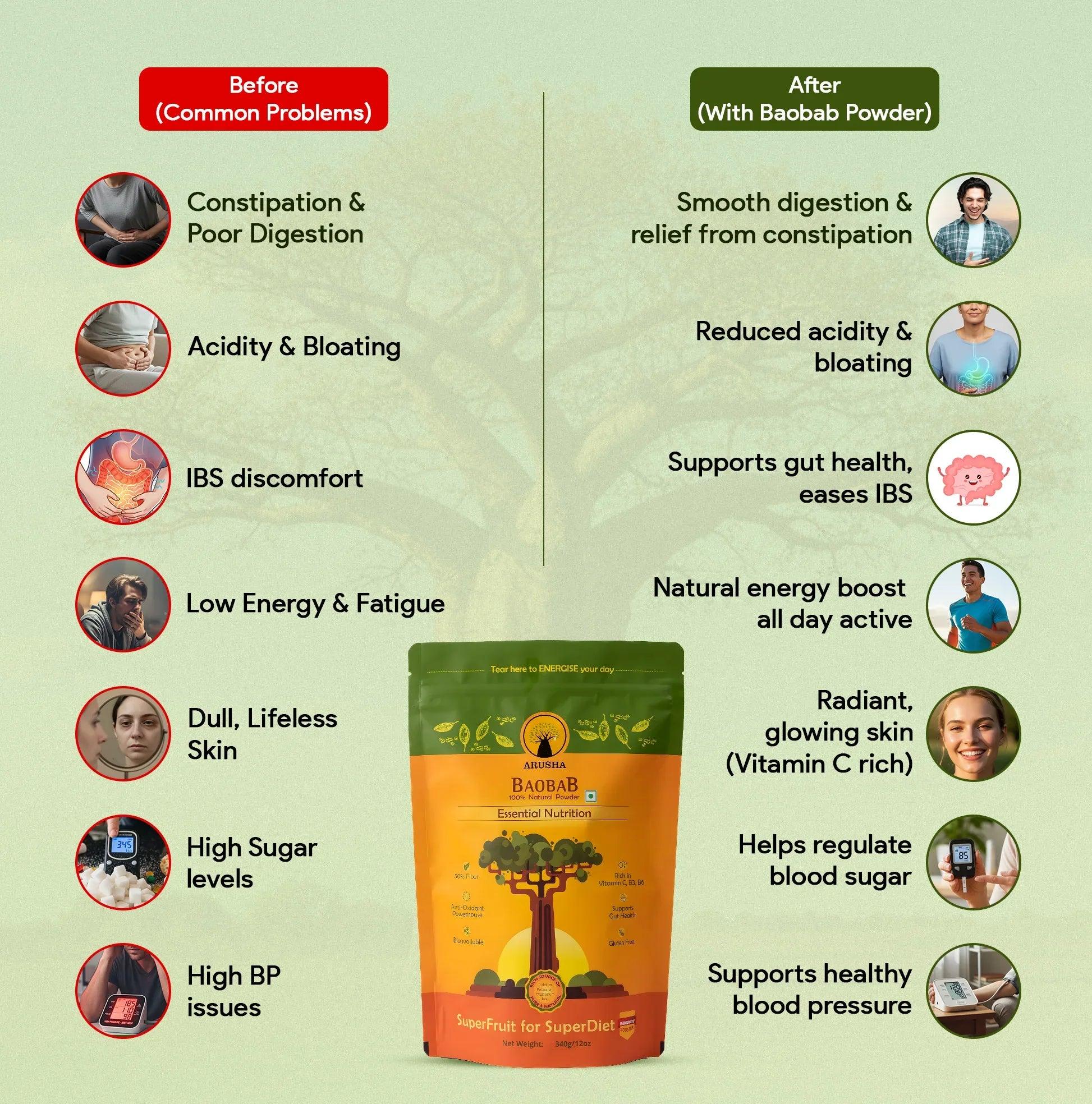
- Vitamin C fully intact: Up to 6x more Vitamin C per gram than oranges.
- Polyphenols preserved: Supports antioxidant protection and blood sugar control.
- Natural prebiotic fiber: Helps support gut health and digestive balance.
- Essential minerals retained: Calcium, potassium, magnesium, and iron remain naturally present.
- No artificial additives: Free from fillers, preservatives, and anti-caking agents.
The Social Story: How Baobab Harvesting Transforms Communities
Organic baobab powder sourcing isn't just an environmental story — it's a profoundly human one. Organizations like Baobab Products Mozambique (BPM) and the Eco-MICAIA Foundation have built supply chains that put women at the center of economic empowerment.
How to Identify Truly Organic Baobab Powder
- Single Ingredient: "Baobab Fruit Powder (Adansonia digitata)"
- Wild-Harvested Statement
- Country of Origin Clearly Listed
- Light Cream to Off-White Color
- Tangy, Citrus-Like Flavor
- Transparent Supply Chain Information
- Certified Organic Logos (USDA Organic, EU Organic, etc.)
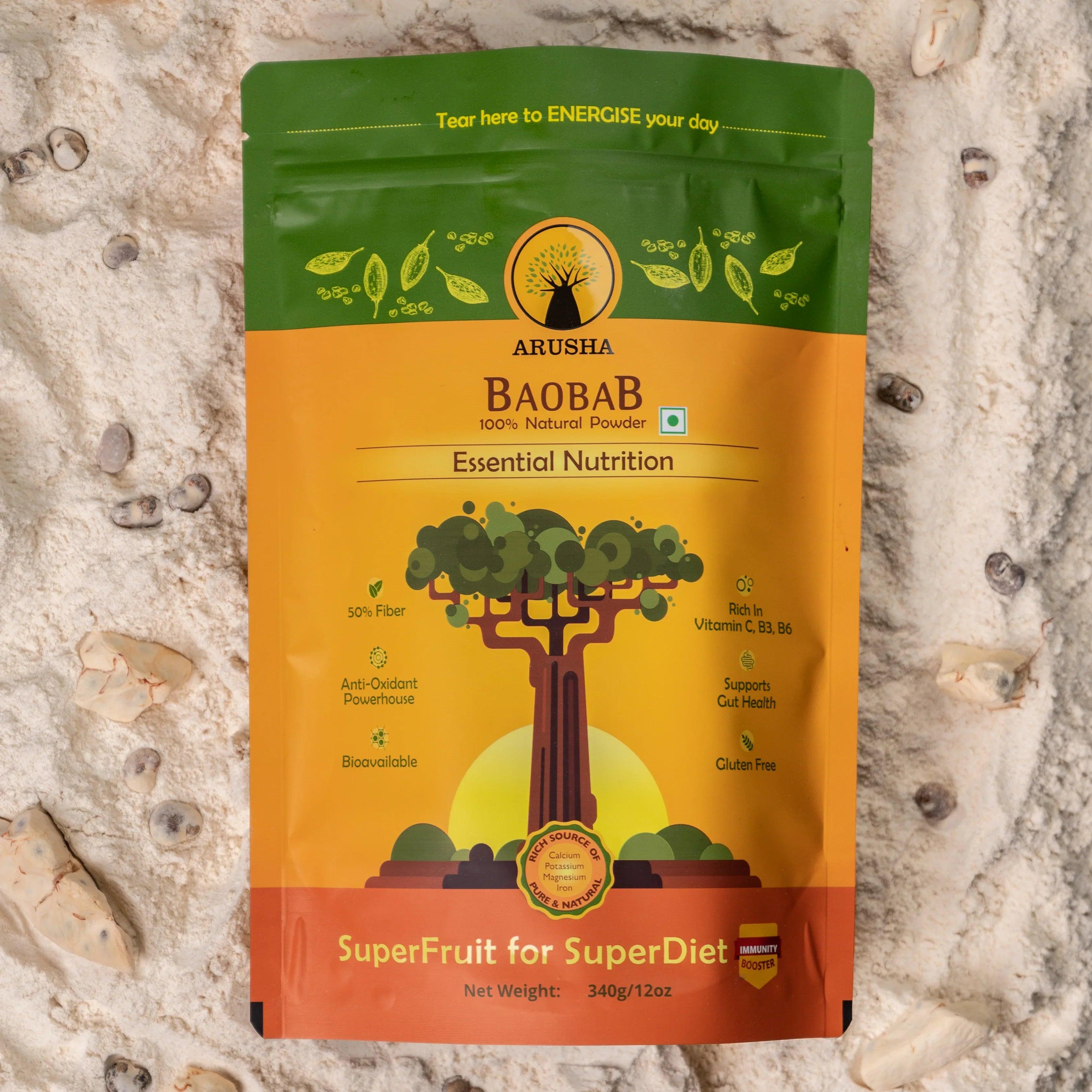
Arusha Foods Baobab Powder: Organic by Nature
- 100% pure baobab fruit powder
- Sourced from sustainably harvested, wild-growing baobab trees
- Minimally processed to preserve nutrients
- Naturally organic with no chemical inputs
- Rich in Vitamin C, dietary fiber, polyphenols, and minerals
Experience Pure Organic Baobab Powder
Taste the difference that truly natural, minimally processed baobab makes. From the ancient African tree to your daily routine.
Shop Arusha Foods Organic Baobab Powder → arushafoods.in
Conclusion: Organic by Nature, Extraordinary by Nutrition
The journey from tree to powder makes baobab one of the most genuinely organic superfoods available anywhere in the world. When you choose organic baobab powder, you're making a choice that benefits your health, supports ethical sourcing, and protects the environment.
Sources & References
- KCOA — Baobab: A Tree That Transforms Lives (kcoa-africa.org)
- Organic Baobab — What is Baobab?
FAQ
Is baobab automatically organic because it grows wild?
Wild-growing baobab trees are generally free from synthetic chemicals, but organic certification requires verification of the entire supply chain.
What is the difference between wild-harvested and organic baobab?
Wild-harvested refers to how the fruit is collected, while organic certification verifies the entire production process.
Does processing affect baobab powder's nutritional value?
Yes. Minimally processed baobab powder retains more Vitamin C, fiber, and polyphenols than heavily processed alternatives.
How should I store organic baobab powder?
Store in a cool, dry place in an airtight container away from direct sunlight.
Is baobab powder safe for everyone?
Baobab powder is generally safe for most people. Consult a healthcare provider if pregnant, breastfeeding, or managing a medical condition.