
Hypertension — or high blood pressure — affects more than 1.13 billion people worldwide, making it one of the leading preventable risk factors for heart attack, stroke, and kidney failure. And the numbers are only growing: between 1990 and 2019 alone, global hypertension prevalence nearly doubled, with the heaviest burden falling on low- and middle-income countries.
Managing blood pressure demands a whole-life approach — a heart-healthy diet, regular physical activity, stress reduction, and, for many, medication. Increasingly, people are also turning to natural, evidence-informed supplements to support their cardiovascular health. One plant rising to the top of that conversation is Moringa oleifera — and the question on everyone's lips is: does moringa lower blood pressure?
In this comprehensive blog, Arusha Foods explores the moringa and blood pressure connection in depth — backed by peer-reviewed science, including the landmark 2025 review published in Nutrients (DOI: 10.3390/nu17071258) and the insightful 2025 review in Biomedicine & Pharmacotherapy (ScienceDirect).
We cover everything from the mechanisms behind moringa blood pressure regulation, to whether moringa seed is good for high blood pressure, to the all-important question of moringa and blood pressure medication interactions.
What is High Blood Pressure — And Why Does It Matter?
High blood pressure (hypertension) is defined as a systolic reading of 140 mmHg or higher, or a diastolic reading of 90 mmHg or higher. Blood pressure is the force your blood exerts on artery walls as it circulates. When that force is chronically elevated, it damages blood vessels over time, stressing the heart, brain, kidneys, and eyes.
The danger of hypertension lies partly in its silence — it is often called the 'silent killer' because most people experience no obvious symptoms until serious damage has already occurred. Left unmanaged, high blood pressure dramatically increases the risk of heart disease, stroke, kidney disease, and vision loss.
This is why the moringa and high blood pressure conversation matters so much — not as a replacement for medical care, but as a powerful nutritional and lifestyle complement to it.
Can Moringa Lower Blood Pressure? What the Research Shows
The answer is promising: yes, moringa lowers blood pressure — particularly in preclinical (animal) studies, and with early supportive evidence in humans. Let us walk through the evidence.
Animal Study Evidence
The body of animal research on moringa for high blood pressure is substantial and consistent. Multiple peer-reviewed studies have demonstrated that moringa oleifera leaf extract causes dose-dependent reductions in both systolic and diastolic blood pressure across a range of hypertensive models.
One key study found that intravenous administration of aqueous moringa leaf extract at doses of 1, 3, 10, and 30 mg/kg produced a rapid, dose-dependent reduction in mean arterial pressure in normotensive rats and in rats with induced hypertension (L-NAME hypertensive model). Another study demonstrated significant reductions in systolic and diastolic blood pressure following oral administration of bioactive peptides isolated from moringa leaves, with the most pronounced effect observed 6 hours after administration.
Perhaps most significantly for real-world application, a human-relevant study showed that daily supplementation of 30 g of moringa leaf powder in 30 obese hypertensive individuals for 60 days significantly decreased both BMI, systolic blood pressure (SBP), and diastolic blood pressure (DBP), while also increasing urine frequency — a sign of the diuretic effect contributing to blood pressure reduction.
Human Clinical Evidence
While large-scale randomised controlled trials are still needed, the existing human evidence for moringa and blood pressure is encouraging:
- A study on hypertensive patients using moringa leaf powder reported measurable reductions in both systolic and diastolic blood pressure readings compared to baseline.
- Moringa's high potassium content, combined with its diuretic properties, mirrors the mechanism of action of certain antihypertensive medications (thiazide diuretics), suggesting a physiologically plausible pathway for its blood pressure benefits.
- The 2025 Nutrients review (University of Milan, PMC11990149) — the most comprehensive recent synthesis of moringa and blood pressure evidence — confirmed that many preclinical studies attribute antihypertensive properties to moringa, particularly the leaves, while calling for more rigorous human trials.
The honest scientific picture: the evidence is strong in animal models and early but real in humans. Moringa leaf is good for blood pressure as a nutritional support strategy — not a substitute for prescribed medication.
How Does Moringa Leaf Lower Blood Pressure? The Key Mechanisms
Understanding how moringa lowers blood pressure requires looking at its rich portfolio of bioactive compounds. Researchers have now identified several distinct mechanisms by which moringa oleifera influences blood pressure regulation — each acting on a different physiological pathway.
1. ACE Inhibition — Moringa's Most Powerful Mechanism
One of the most clinically significant mechanisms linking moringa and high blood pressure is ACE (angiotensin-converting enzyme) inhibition. ACE is the enzyme responsible for converting angiotensin I into angiotensin II — a potent vasoconstrictor that narrows blood vessels and raises blood pressure. This is the same mechanism targeted by widely prescribed ACE inhibitor drugs such as captopril, enalapril, and lisinopril.
Research has identified two key ACE-inhibiting compounds in moringa leaves: quercetin-3-O-glucoside and kaempferol-3-O-glucoside. Additionally, two bioactive peptides — LGF (Leu-Gly-Phe-Phe) and GLFF (Gly-Leu-Phe-Phe) — have demonstrated strong ACE and renin inhibitory activity in studies. By inhibiting ACE naturally, moringa blood pressure reduction occurs through vasodilation — the relaxation and widening of blood vessels — which reduces peripheral resistance and lowers pressure.
2. Nitric Oxide Enhancement — Opening the Blood Vessels
Moringa oleifera leaf extract has been shown to enhance the production and bioavailability of nitric oxide (NO) — a key signalling molecule that causes smooth muscle in blood vessel walls to relax (vasodilation). Specifically, moringa increases endothelial nitric oxide synthase (eNOS) activity. When eNOS produces more NO, it activates soluble guanylate cyclase (sGC), which produces cyclic GMP (cGMP), leading to muscle relaxation, vessel dilation, and reduced blood pressure.
This mechanism was demonstrated even in preparations where other pathways (eNOS and cyclooxygenase inhibitors) were blocked — pointing to additional, endothelium-derived hyperpolarizing factors (EDHF) contributing to moringa's vasodilatory effect.
3. Antioxidant Protection — Restoring Endothelial Health
Oxidative stress is a major driver of hypertension. Excessive reactive oxygen species (ROS) scavenge nitric oxide before it can act, impairing endothelial function and causing vascular inflammation and stiffness. Moringa is extraordinarily rich in antioxidants — beta-carotene, phenolic acids, quercetin, kaempferol, chlorogenic acid, and isothiocyanates — that neutralise excess ROS.
Studies have shown that moringa leaf extract restores intracellular antioxidant defences — including superoxide dismutase (SOD), catalase (CAT), and glutathione — while reducing pro-inflammatory markers like TNF-alpha and IL-6. This antioxidant action both protects nitric oxide availability and reduces vascular inflammation, addressing two root causes of sustained high blood pressure.
4. Diuretic Effect — Reducing Blood Volume
Moringa leaf is notably high in potassium — a mineral directly linked to blood pressure regulation. High potassium intake promotes the excretion of sodium via the kidneys, reducing blood volume, and thereby decreasing the pressure exerted on vessel walls. This is the same basic mechanism as potassium-sparing diuretics. The human study on obese hypertensive patients noted a 27.2% increase in urine frequency alongside blood pressure reduction — confirming moringa's mild diuretic activity in practice.
5. Calcium Channel Modulation
Emerging research shows that bioactive compounds in moringa — including chlorogenic acid, gallic acid, quercetin, and kaempferol — may block the influx of calcium into vascular smooth muscle cells through both voltage-operated (VOCCs) and receptor-operated (ROCCs) calcium channels. Since calcium entry triggers muscle contraction (vasoconstriction), blocking this process helps blood vessels remain relaxed and dilated, directly reducing peripheral resistance and blood pressure.
6. Moringin — The ACE-Inhibiting Isothiocyanate
Moringin (4-[α-L-rhamnosyloxy]-benzyl isothiocyanate) is one of moringa's most pharmacologically active compounds. Research confirms that moringin acts as a natural ACE inhibitor, reducing the conversion of angiotensin I to angiotensin II, promoting vasodilation. Beyond ACE inhibition, moringin also exhibits potent antioxidant and anti-inflammatory properties, improving endothelial function by enhancing eNOS activity and thereby boosting nitric oxide production. It is, in effect, a multi-mechanism antihypertensive compound within the moringa leaf.
Is Moringa Seed Good for High Blood Pressure?
Yes — moringa seed is also good for high blood pressure, though the evidence is less extensive than for the leaves. The 2025 Nutrients review confirms that antihypertensive effects have been observed from different parts of the moringa tree, including the seeds.
Moringa seeds contain a distinct profile of bioactive compounds including glucosinolates, nitrile and thiocarbamate glycosides (Niazinin A, B, and Niazimicin), and isothiocyanate glycosides. Studies in animal models have shown that:
- Niazinin A and B have demonstrated direct blood pressure-lowering effects in animal studies, working via vasodilation pathways.
- Moringa seed extracts contain compounds with ACE inhibitory properties, paralleling those found in the leaves.
- The antioxidant compounds in seeds help reduce vascular oxidative stress.
However, moringa leaf powder remains the most researched, most convenient, and most broadly beneficial form for blood pressure support — which is why Arusha Foods' premium moringa leaf powder is the product most suited to cardiovascular wellness goals.
Moringa and Blood Pressure Medication: What You Must Know
⚠ IMPORTANT: Please read this section carefully before combining moringa with any antihypertensive medication.
This is one of the most critical questions for anyone managing high blood pressure with medication. The answer requires nuance:
The Interaction Risk
Moringa and blood pressure medication can interact — and this interaction is rated as MODERATE RISK by clinical pharmacology resources including WebMD/RxList. Because moringa has its own blood pressure-lowering (hypotensive) effects, combining it with antihypertensive drugs may produce an additive effect — meaning blood pressure could drop lower than intended.
Medications known to have this potential interaction include:
- ACE inhibitors: captopril (Capoten), enalapril (Vasotec), lisinopril
- Angiotensin receptor blockers (ARBs): losartan (Cozaar), valsartan (Diovan)
- Calcium channel blockers: amlodipine (Norvasc), diltiazem (Cardizem)
- Diuretics: hydrochlorothiazide (HydroDIURIL), furosemide (Lasix)
What Research Tells Us
A drug-herb interaction study examined moringa leaf extract administered alongside several antihypertensive medications in spontaneously hypertensive rats. The findings showed that while moringa combined with drugs did produce significant blood pressure reduction compared to untreated controls, there was no statistically significant difference between the drug-alone groups and the drug-plus-moringa groups — suggesting that moringa may not dramatically amplify medication effects when used at typical supplemental doses. However, this remains an animal study, and individual human responses can vary.
The 2025 Nutrients review stresses that potential interactions between moringa and antihypertensive medications must be thoroughly examined before clinical recommendations can be made.
The Bottom Line on Moringa and High Blood Pressure Medication
- Always consult your doctor or cardiologist before adding moringa to your routine if you are on blood pressure medication.
- Monitor your blood pressure regularly when introducing moringa, particularly in the first 2–4 weeks.
- Start with a small dose (1 teaspoon / 5 g daily) and increase only under medical supervision.
- Never stop or reduce your prescribed medication without your doctor's guidance, even if you feel your blood pressure improving.
Moringa Dosage for High Blood Pressure
One of the most common questions is: what is the right moringa dosage for high blood pressure? While no single universally validated clinical dose has been established for hypertension specifically, the research offers practical guidance:
- General starting dose: 1 teaspoon (approximately 5 g) of moringa powder daily
- Therapeutic range in human studies: 10–30 g of moringa leaf powder daily (for cardiovascular outcomes)
- Blood pressure study dose: 30 g/day of moringa leaf powder for 60 days produced significant reductions in systolic and diastolic BP in obese hypertensive individuals
- Daily upper limit: Do not exceed the equivalent of 70 g of fresh leaves per day (approx. 11 teaspoons of dried leaf powder)
Important: These doses are from studies on otherwise healthy adults supplementing alongside (not replacing) standard care. Always work within the guidance of your healthcare provider when addressing high blood pressure.
How to Take Moringa for High Blood Pressure: Best Methods
Moringa Powder in Warm Water (Most Common)
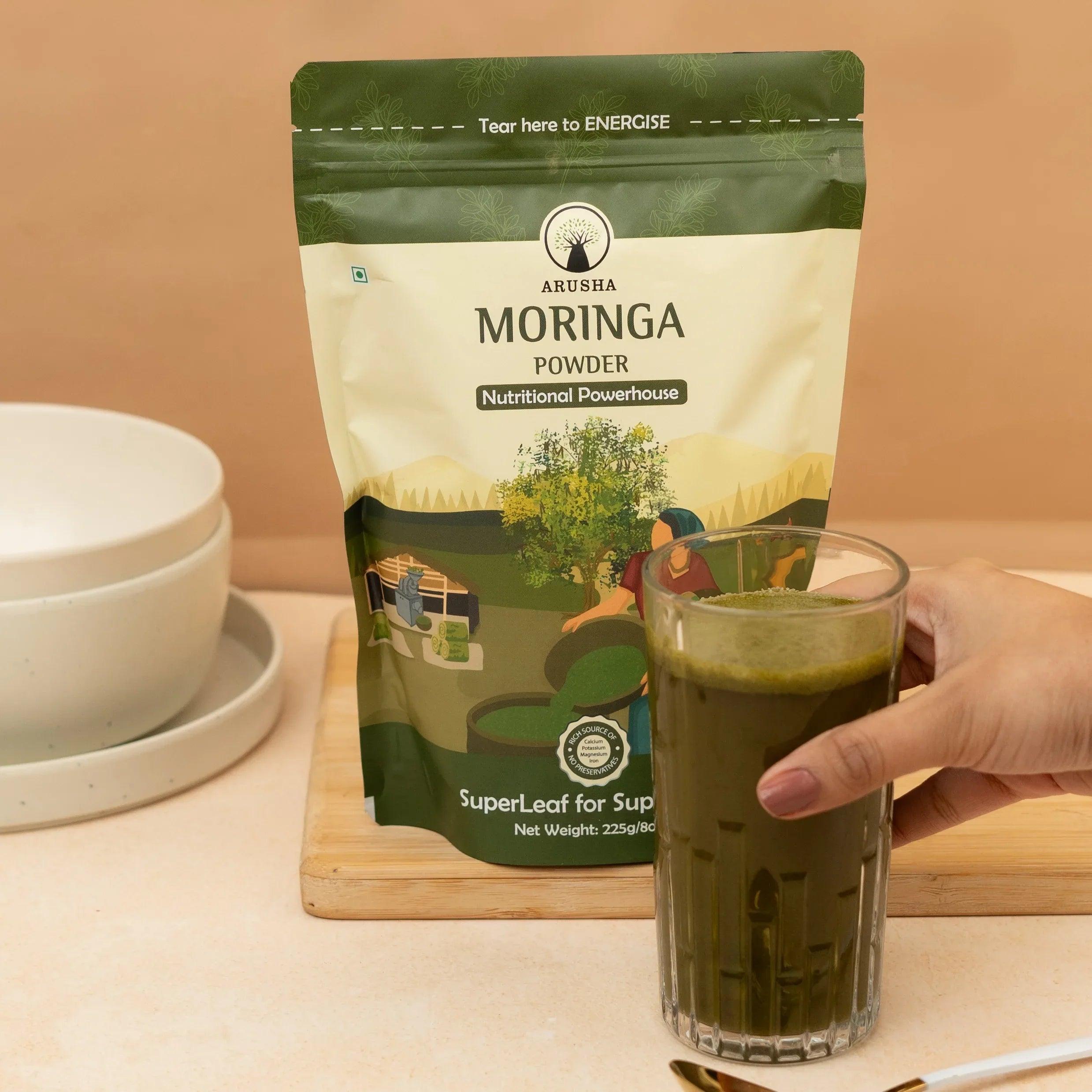
Stir 1–2 teaspoons of Arusha Foods moringa powder into a glass of warm (not boiling) water. Drink 20–30 minutes before a meal. This is the simplest, most bioavailable format for daily use. Adding a squeeze of lemon enhances absorption of moringa's antioxidants and gives a pleasant flavour.
Moringa Tea
Steep 1–2 teaspoons of moringa powder in hot water for 5–10 minutes. Add fresh ginger (also known to support cardiovascular health), turmeric, or lemon. Enjoy 1–2 cups daily, ideally in the morning and early afternoon. Avoid taking too close to bedtime due to its mild diuretic effect.
Blended Into Smoothies
Add 1–2 teaspoons to a green smoothie with banana, spinach, and coconut water. Banana and coconut water contribute additional potassium — complementing moringa's own potassium content for enhanced blood pressure support.
Mixed Into Food
Sprinkle moringa powder over cooked dal, soup, rice, or curry just before serving. Avoid adding to dishes while they are still on the flame — excessive heat degrades the heat-sensitive antioxidants and isothiocyanates responsible for moringa's cardiovascular benefits. This is why Arusha Foods moringa powder is cold-processed: to preserve these vital compounds.
Additional Heart Health Benefits of Moringa Leaf
- Cholesterol regulation: Moringa has demonstrated lipid-lowering properties, reducing LDL (bad) cholesterol and triglycerides — both major risk factors for cardiovascular disease.
- Arterial health: Antioxidant compounds protect arterial walls from oxidative damage and atherosclerosis (hardening of the arteries).
- Anti-inflammatory action: Chronic vascular inflammation is a root driver of both hypertension and heart disease. Moringa's anti-inflammatory compounds directly address this.
- Blood sugar support: Diabetes and hypertension frequently co-exist. Moringa's dual action on blood glucose and blood pressure makes it particularly valuable for those managing both conditions.
- Weight management: The 60-day human study noted significant BMI reduction alongside blood pressure improvements — reflecting moringa's broader metabolic benefits.
- Kidney protection: As hypertension is a leading cause of kidney disease, moringa's antioxidant and anti-inflammatory properties offer meaningful renal protection.
Why Arusha Foods Moringa Powder is Your Best Choice
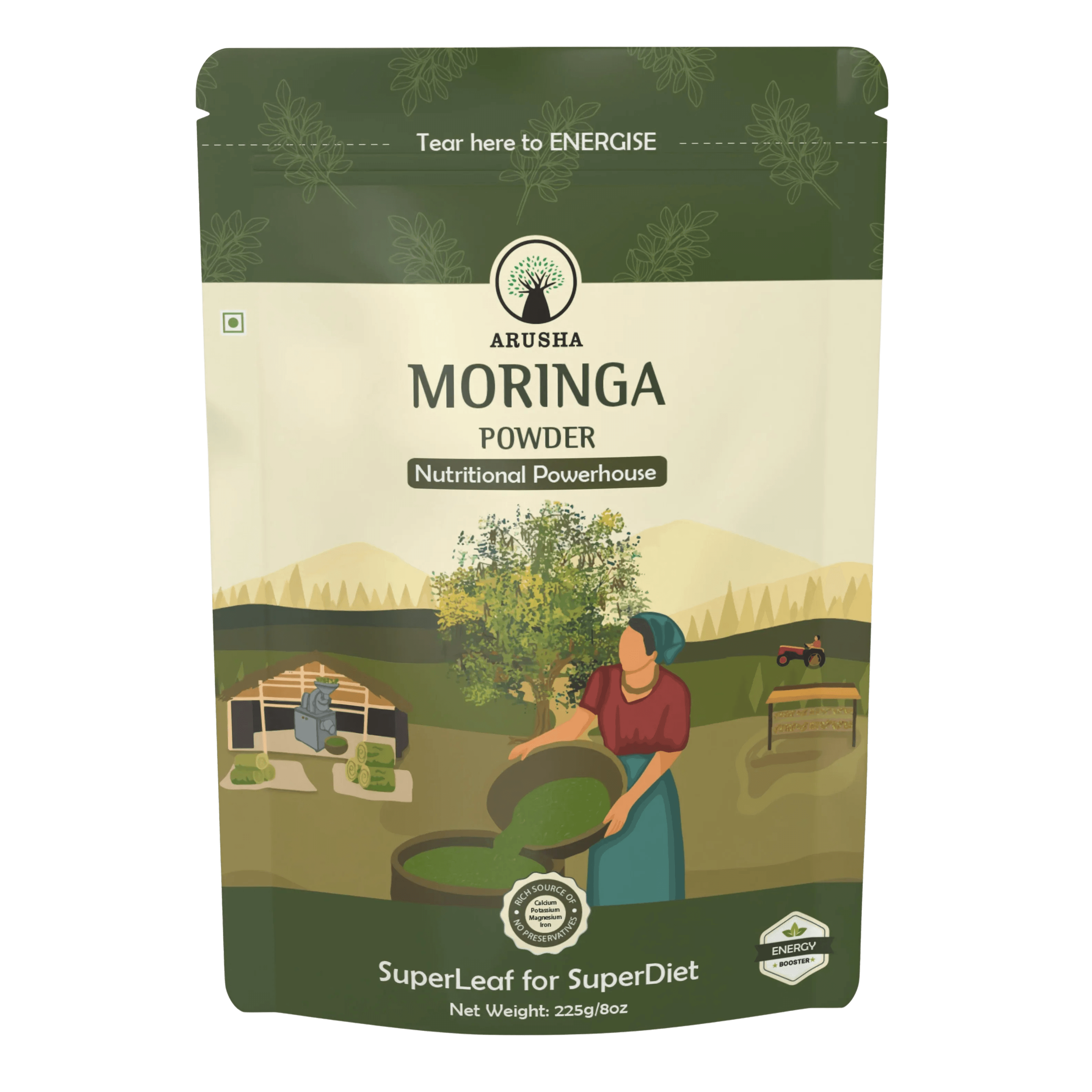
When it comes to moringa for high blood pressure, quality is everything. The antihypertensive compounds in moringa — isothiocyanates, quercetin-3-O-glucoside, kaempferol-3-O-glucoside, bioactive peptides — are fragile. They are destroyed by excessive heat, degraded by poor storage, and diluted by low-quality processing. Here is what sets Arusha Foods apart:
- 100% pure moringa leaf powder — no fillers, binders, flavour agents, or preservatives
- Cold-processed and shade-dried to preserve heat-sensitive antioxidants and isothiocyanates
- Sourced from clean, pesticide-free farms in optimal moringa-growing regions
- Finely milled for smooth mixing in water, teas, smoothies, and food
- Rich, vibrant green colour — a reliable visual indicator of high chlorophyll and antioxidant content
- Independently lab-tested for purity, potency, and microbiological safety
- No artificial processing that strips the very compounds your cardiovascular system needs
When you choose Arusha Foods, you are choosing a moringa powder that delivers the full spectrum of cardiovascular-supporting nutrients in every serving — exactly as nature intended.
Precautions: Using Moringa Leaf Safely for Blood Pressure
- Doctor consultation is non-negotiable if you are already on antihypertensive medication (see the interaction discussion above).
- Monitor your blood pressure regularly when starting moringa supplementation.
- Start low, go slow: Begin with 1 teaspoon (5 g) daily and gradually increase over 2–4 weeks.
- Avoid moringa root extract: Roots contain potentially toxic alkaloids. Use only leaf powder from a reputable supplier like Arusha Foods.
- Pregnancy and breastfeeding: Consult your doctor before use.
- Kidney disease: High potassium intake may need to be monitored in those with kidney conditions.
- Low blood pressure (hypotension): Do not use moringa leaf for blood pressure if your readings are already low.
Conclusion: Moringa and High Blood Pressure — A Natural Support Strategy
The evidence is clear: moringa and high blood pressure have a meaningful, science-supported relationship. Through ACE inhibition, nitric oxide enhancement, antioxidant-mediated endothelial protection, calcium channel modulation, and natural diuretic action, moringa lowers blood pressure via multiple complementary mechanisms — the same pathways targeted by pharmaceutical interventions, but through nature's own compounds.
Does moringa lower blood pressure? In preclinical models, consistently yes. In early human evidence, encouragingly yes. More large-scale human trials are underway and needed to establish definitive clinical protocols — and Arusha Foods follows this science closely. But for people seeking a nutritious, research-informed natural supplement to support their cardiovascular health journey alongside medical treatment, moringa leaf powder represents one of the most compelling options available.
Whether you are exploring moringa for high blood pressure for the first time, concerned about moringa and blood pressure medication interactions, or simply looking for the best way to incorporate this incredible plant into your daily routine — Arusha Foods is your trusted, transparent, science-aligned partner.
References
Menichetti F. et al. (2025). Moringa oleifera and Blood Pressure: Evidence and Potential Mechanisms. Nutrients, 17(7):1258. DOI: 10.3390/nu17071258.
Sciencedirect (2025). An insight review on the potential anti-hypertensive effects of Moringa oleifera. Biomedicine & Pharmacotherapy.
Frontiers in Pharmacology (2022). The Potency of Moringa oleifera Lam. as Protective Agent in Cardiac Damage and Vascular Dysfunction.