
Diabetes is one of the fastest-growing health challenges of our time, affecting over 537 million adults globally. Managing blood sugar levels demands consistent effort — a healthy diet, regular exercise, medication, and increasingly, the support of science-backed natural supplements. Among these, moringa powder for diabetes is emerging as one of the most promising natural allies. Derived from the leaves of Moringa oleifera — the legendary "miracle tree" — Arusha Foods' 100% pure moringa leaf powder brings ancient wisdom together with modern nutritional science to support your diabetes management journey.
In this comprehensive guide, we answer your most important questions: Is moringa good for diabetics? How do moringa leaves help with diabetes? What is the best way to take moringa for diabetes? And is moringa seed good for diabetics too? Read on for everything you need to know.
What is Moringa Oleifera? The Diabetes Superfood Explained
Moringa oleifera is a fast-growing tree native to the foothills of the Himalayas and widely cultivated across tropical and subtropical regions including India, Africa, and Southeast Asia. Every part of the tree — leaves, pods, seeds, bark, and roots — has been used for centuries in traditional medicine. Today, science is validating what ancient healers knew: the moringa tree is extraordinarily rich in bioactive compounds that support human health.
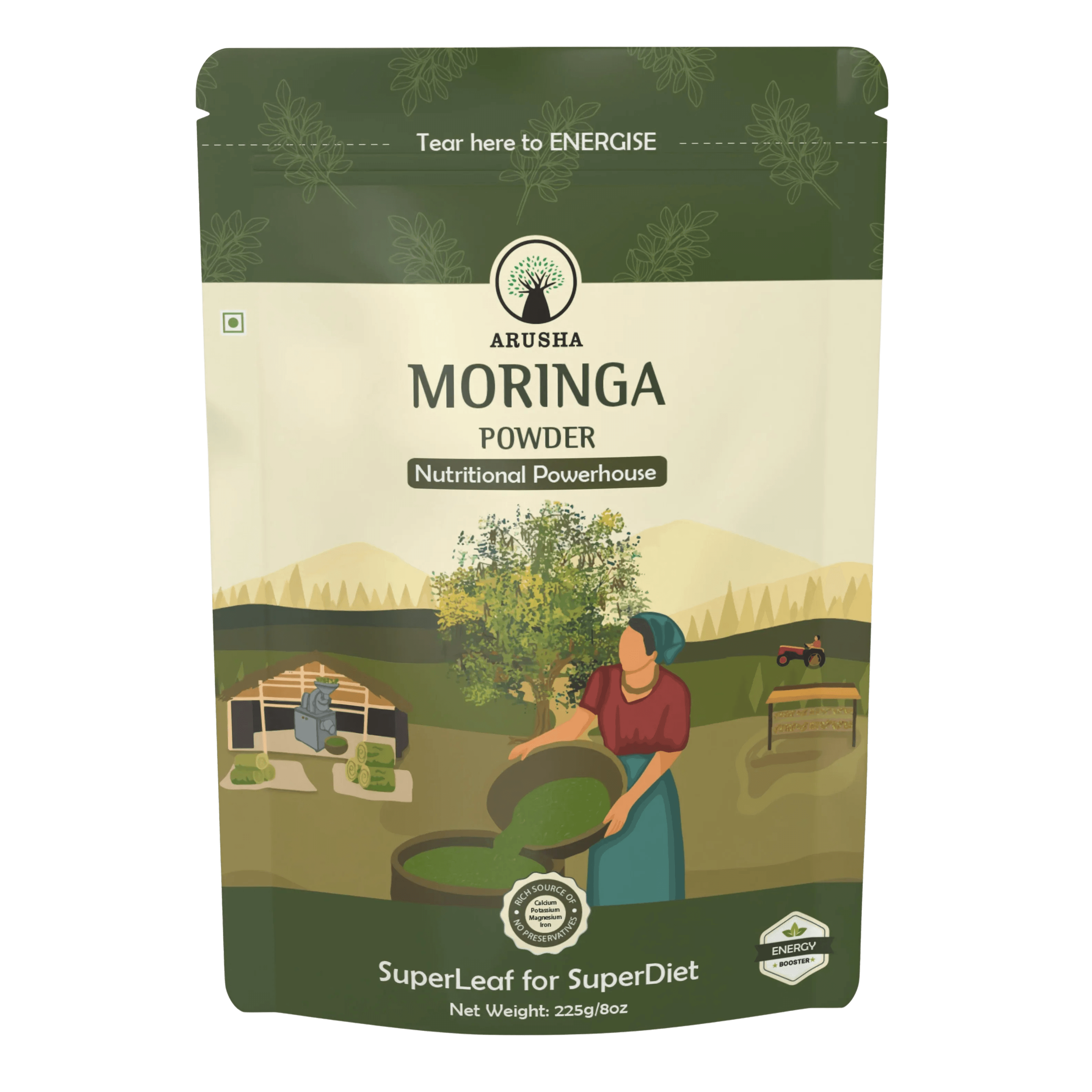
Arusha Foods' moringa leaf powder is made by carefully drying and grinding fresh moringa leaves at low temperatures, preserving the full spectrum of nutrients. Per 100 grams, moringa leaf powder contains:
- 7 times the Vitamin C of oranges
- 4 times the Calcium of milk
- 4 times the Vitamin A of carrots
- 2 times the Protein of yogurt
- 3 times the Potassium of bananas
- Rich amounts of iron, magnesium, zinc, and B vitamins
- Powerful antioxidants: quercetin, chlorogenic acid, and kaempferol
This remarkable nutritional profile is precisely why moringa powder and diabetes management are increasingly discussed together by healthcare practitioners and nutrition researchers worldwide.
Is Moringa Oleifera Good for Diabetics? What the Research Says
The short answer is: yes, moringa oleifera is good for diabetics — and the scientific evidence is growing. A landmark review published in Nutrients (PMC6950081) examined the effects of moringa oleifera on glycaemia and insulin levels across multiple animal and human studies. The researchers found evidence of antihyperglycemic, antioxidant, anti-inflammatory, and lipid-regulating properties — all directly relevant to diabetes management.
A second major review published in Phytotherapy Research (Sciencedirect, 2019) systematically analysed moringa's potential to improve glucose control. This review of 33 animal studies and 8 human studies found that water and organic solvent extracts of moringa leaves — and secondly, seeds — consistently demonstrated hypoglycemic activity, particularly under postprandial (post-meal) conditions.
These findings make moringa leaf powder for diabetes not just a traditional remedy, but a scientifically supported nutritional supplement.
How Does Moringa Powder Help with Diabetes? The Key Mechanisms
Understanding why moringa powder is good for diabetes requires looking at the bioactive compounds found in moringa leaves and how they interact with the body's glucose regulation systems. Research has identified several key mechanisms:
1. Inhibition of Carbohydrate-Digesting Enzymes
One of the most clinically significant moringa powder benefits for diabetes is its ability to inhibit the enzymes alpha-amylase and alpha-glucosidase. These enzymes are responsible for breaking down complex carbohydrates into simple sugars. By slowing this process, moringa leaf powder effectively reduces the rate of glucose absorption from food — lowering post-meal blood sugar spikes. This is the same principle behind certain prescription diabetes medications.
2. Improved Insulin Sensitivity and Glucose Uptake
The flavonoid kaempferol — abundant in moringa leaves — has been shown to improve glycolysis, stimulate glucose uptake in muscle and liver cells, enhance glycogen synthesis, and activate AMP-activated protein kinase (AMPK), a key enzyme in metabolic regulation. This means moringa powder actively helps your cells use glucose more efficiently, making it a powerful supplement for managing moringa diabetes connections at a cellular level.
3. Reduction in Gluconeogenesis
Moringa extracts have been shown to reduce gluconeogenesis — the process by which the liver produces new glucose from non-carbohydrate sources. In diabetics, excessive gluconeogenesis is a major contributor to high fasting blood sugar levels. By normalising the gene expression of enzymes involved in glucose metabolism, moringa helps restore healthy liver glycolytic activity and glycogen storage.
4. Powerful Antioxidant and Anti-inflammatory Protection
Chronic inflammation and oxidative stress are hallmarks of diabetes and accelerate its complications — from neuropathy to kidney disease. Moringa leaves are exceptionally rich in antioxidants including quercetin and chlorogenic acid. Research shows moringa extracts strengthen intracellular antioxidant defences (catalase, superoxide dismutase, glutathione) and reduce inflammatory markers like TNF-alpha, IL-1β, and IL-6. For diabetics, this protection is enormously valuable.
5. Lipid Regulation
Diabetics are at significantly elevated risk of cardiovascular disease due to dyslipidemia — abnormal blood lipid levels. The antihyperglycemic and lipid-regulating properties of moringa oleifera work synergistically: alongside managing blood sugar, moringa powder benefits for diabetes extend to supporting healthier cholesterol and triglyceride levels.
Is Moringa Leaves Good for Diabetes? Clinical Evidence in Humans
Yes — moringa leaves are good for diabetes, and human clinical evidence is emerging to back this up. While animal studies have produced robust and consistent results, researchers are now building on them with human trials. Here is what current studies show:
- A clinical study found that 4 g moringa leaf powder capsules taken after an overnight fast could significantly increase insulin secretion in participants.
- Supplementation with approximately 20 g of moringa leaf powder for at least 2 weeks improved postprandial blood glucose in subjects with prediabetes or diabetes.
- Multiple human studies reported improvements in fasting blood glucose and HbA1c (a 3-month average blood sugar marker) with regular moringa powder consumption.
- A completed randomised clinical trial in women with Type 2 diabetes showed that 10 g of moringa leaf powder daily alongside standard oral hypoglycaemic therapy improved glycaemic control over 3 months.
- Postprandial blood sugar studies — where glucose is measured after meals — have shown particularly encouraging results, supporting moringa powder as an effective supplement to take before or with meals.
The researchers rightly note that more large-scale, long-term human trials are needed. However, the current evidence is encouraging enough for moringa leaf powder for diabetes to be taken seriously as a complementary support alongside medical treatment.
What is the Best Way to Take Moringa for Diabetes?
Knowing how to consume moringa powder for diabetes effectively is key to getting maximum benefits. Here are the best evidence-informed methods:
Moringa Powder in Water or Warm Drinks
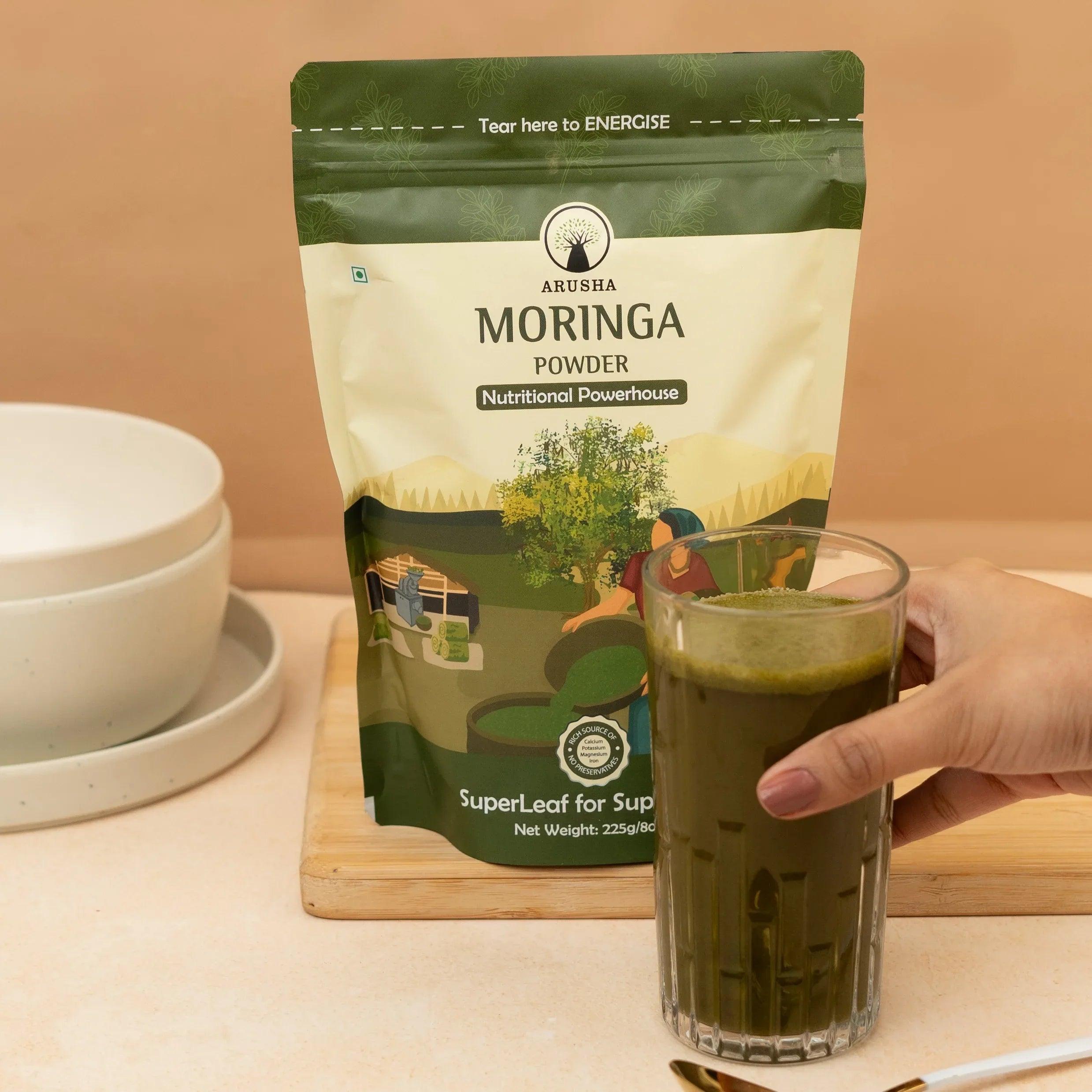
The simplest way to take moringa for diabetes is to stir 1–2 teaspoons (approximately 5–10 grams) of Arusha Foods moringa powder into a glass of warm water or herbal tea before meals. This allows the active compounds — particularly chlorogenic acid and isothiocyanates — to begin working before glucose enters your bloodstream from food.
Moringa Powder Mixed Into Food
How to consume moringa powder for diabetes in food is even easier than you might think. Sprinkle moringa powder over rice, dal, soups, or curries. Blend it into smoothies, yogurt, or lassi. Mix it into whole-wheat chapati dough. The mild, earthy flavour of quality moringa powder blends naturally into many Indian dishes.
Moringa Leaf Tea
Brewing moringa leaf tea is one of the most traditional ways to consume this plant. Steep 1–2 teaspoons of Arusha Foods moringa powder (or fresh/dried leaves) in hot water for 5–10 minutes. Adding fresh lemon or ginger can enhance both the flavour and the health benefits. Drinking this 20–30 minutes before main meals can be particularly helpful for post-meal blood sugar management.
Recommended Dosage
For diabetes management, a typical starting dose is 1–2 teaspoons (5–10 grams) daily, gradually increasing as tolerated up to 6 grams per day for general use. Clinical studies showing improvements in blood glucose have used doses ranging from 4 g to 20 g daily. Always start low and increase gradually. The daily intake should ideally not exceed the equivalent of 70 grams of fresh leaves.
Always consult your doctor before starting any new supplement, especially if you are already on diabetes medication.
Is Moringa Seed Good for Diabetics?
Yes — moringa seed is also good for diabetics, though it is less widely studied than the leaves. The systematic review referenced above (Phytotherapy Research, 2019) confirmed that seed extracts — second only to leaves — demonstrate hypoglycemic activity in experimental models. Moringa seeds are rich in:
- Glucosinolates and isothiocyanates — potent anti-inflammatory and antioxidant compounds
- Phytosterols that may support cholesterol regulation
- Protein (around 35–40%) with a good amino acid profile
- Zinc and other minerals important for insulin production
How to use moringa seeds for diabetes: chew 1–2 raw seeds daily, or crush and sprinkle over salads. However, moringa leaf powder remains the most well-studied and convenient format, which is why Arusha Foods focuses on delivering premium quality moringa leaf powder.
Note: Moringa seeds have a laxative effect in larger quantities. Stick to 1–2 seeds per day and do not consume in excess.
Additional Moringa Powder Benefits for Diabetes Management
Beyond blood sugar regulation, the broader moringa powder benefits for diabetes include support for the many associated complications of the condition:
- Heart Health: Diabetics face a 2–4x higher risk of cardiovascular disease. Moringa's antioxidant and lipid-regulating properties offer meaningful cardiac support.
- Kidney Protection: Oxidative stress is a major driver of diabetic nephropathy. Moringa's antioxidant compounds help protect kidney tissue from free radical damage.
- Weight Management: Moringa is low in calories yet extremely nutrient-dense. Its high fibre and protein content promotes satiety, supporting healthy weight management — crucial for Type 2 diabetes control.
- Energy Levels: Iron deficiency anaemia is common in diabetics. Moringa's exceptional iron content helps combat fatigue and supports energy metabolism.
- Neuropathy Support: Moringa's anti-inflammatory and antioxidant properties may also offer protective benefits for nerves — relevant for diabetic neuropathy.
- Blood Pressure: Moringa contains isothiocyanates and nitriles with hypotensive properties that support healthy blood pressure levels.
Why Choose Arusha Foods Moringa Powder?
At Arusha Foods, we believe that the best nutrition comes from nature — grown, harvested, and processed with integrity. Our moringa leaf powder for diabetes and everyday wellness is:
- 100% pure moringa leaf powder — no fillers, additives, or preservatives
- Cold-processed and shade-dried to protect heat-sensitive nutrients and antioxidants
- Sourced from clean, pesticide-free farms
- Finely milled for smooth mixing in water, smoothies, and food
- Lab-tested for purity, potency, and microbiological safety
- Rich green colour and fresh, earthy aroma — a sign of genuine quality
When it comes to managing moringa and diabetes together, quality matters enormously. The bioactive compounds responsible for the antihyperglycemic effects — kaempferol, quercetin, chlorogenic acid, and isothiocyanates — are fragile. Excessive heat during processing destroys them. Arusha Foods' careful, low-temperature processing ensures you get the full therapeutic benefit in every spoonful.
Precautions: How to Take Moringa for Diabetes Safely
Moringa powder is generally safe and well-tolerated, but there are important precautions for diabetics:
- Monitor blood sugar levels regularly when starting moringa, as it may lower blood sugar and interact with diabetes medications — potentially requiring dosage adjustments.
- Always inform your doctor or endocrinologist that you are adding moringa powder to your routine.
- Start with a low dose (1 teaspoon/day) and increase gradually to assess tolerance.
- Avoid moringa root extract — it contains potentially toxic alkaloids. Use only leaf powder or seed products.
- Pregnant women should consult their doctor before use.
- People with hypoglycaemia or on blood-thinning medications should exercise caution.
Conclusion: Moringa Powder and Diabetes — A Natural Partnership
The question "is moringa powder good for diabetes?" now has a well-supported answer: yes. From inhibiting carbohydrate-digesting enzymes and improving insulin sensitivity, to reducing inflammation and protecting organs from oxidative damage, moringa oleifera good for diabetics is no longer just a traditional belief — it is backed by a growing body of peer-reviewed scientific evidence.
Whether you are looking to understand how to take moringa for diabetes, exploring whether moringa leaves are good for diabetes, or simply wanting to know the best way to incorporate moringa powder and diabetes management into your daily routine — Arusha Foods moringa powder is your trusted companion.
Moringa is not a cure or a replacement for your prescribed medication. It is a powerful, natural nutritional supplement that — when used correctly and consistently alongside medical guidance — may offer meaningful support for better blood sugar control, healthier energy, and improved quality of life.
References
Leone A. et al. (2019). Effects of Moringa oleifera on Glycaemia and Insulin Levels. Nutrients, PMC6950081.
Vergara-Jimenez M. et al. (2019). Potential of Moringa oleifera to Improve Glucose Control. Phytotherapy Research, Sciencedirect.